What’s the Real Cost Difference Between Online and Retail Contacts?
Updated: July 28, 2026
The real cost difference online vs optical is not usually where people expect it. The biggest swings come from per-day math, rebate mechanics, and hidden fees, not from channel labels alone. If you compare using different assumptions, almost any offer can look like a win.
A fair comparison starts with one rule: run the same prescription, same brand, and same supply period through both channels with all costs visible. Box sticker prices by themselves are almost never enough.
Sights set on colored contacts?
Before getting colored contacts, talk to your eye doctor about getting a prescription
Per-day cost is the most reliable comparison metric. Once you normalize for brand, parameters, and supply length, the gap between online and retail often narrows.
This is where rebate framing can distort outcomes. A retail price that depends on mail-in follow-through is not the same as a transparent upfront price. Both can be valid, but they are not equal unless you account for completion likelihood and timing.
Instead of asking, “Which channel is cheaper?” ask, “What is my true per-day cost for the exact lens my doctor prescribed?”
Hidden retail costs are rarely one dramatic fee. They are usually small components that add up: membership requirements, fitting charges, bundled services, or autoship terms that are harder to exit than expected.
Mail-in rebates are the most common example. They can lower net cost, but only if forms are completed and accepted on time. If that process is unlikely to happen, the advertised discount is not your real price.
These details explain why online cost comparisons can feel confusing even for identical manufacturer products. Ask for net totals after fees and realistic rebate assumptions before comparing channels.
Rebates and Insurance in Contact Lens Price Math
Rebates and insurance both influence final cost, but in different ways. Rebates are delayed and conditional. Insurance is plan-specific and may apply differently by retailer type.
Out-of-pocket cost after all adjustments is what matters. That means subtracting expected insurance support and only counting rebates you will actually complete.
Also check whether savings require annual-supply purchases. Cash flow can matter as much as per-day math, especially if one offer front-loads cost in exchange for future discounts.
Cleaning not your jam?
Ask your optometrist about daily contact lenses. Grab a fresh pair each morning, and toss ’em at the end of the day.
Use one formula across every option: total cost for the supply period divided by number of wear days covered. Total cost should include shipping and fees, minus rebates you realistically expect to receive.
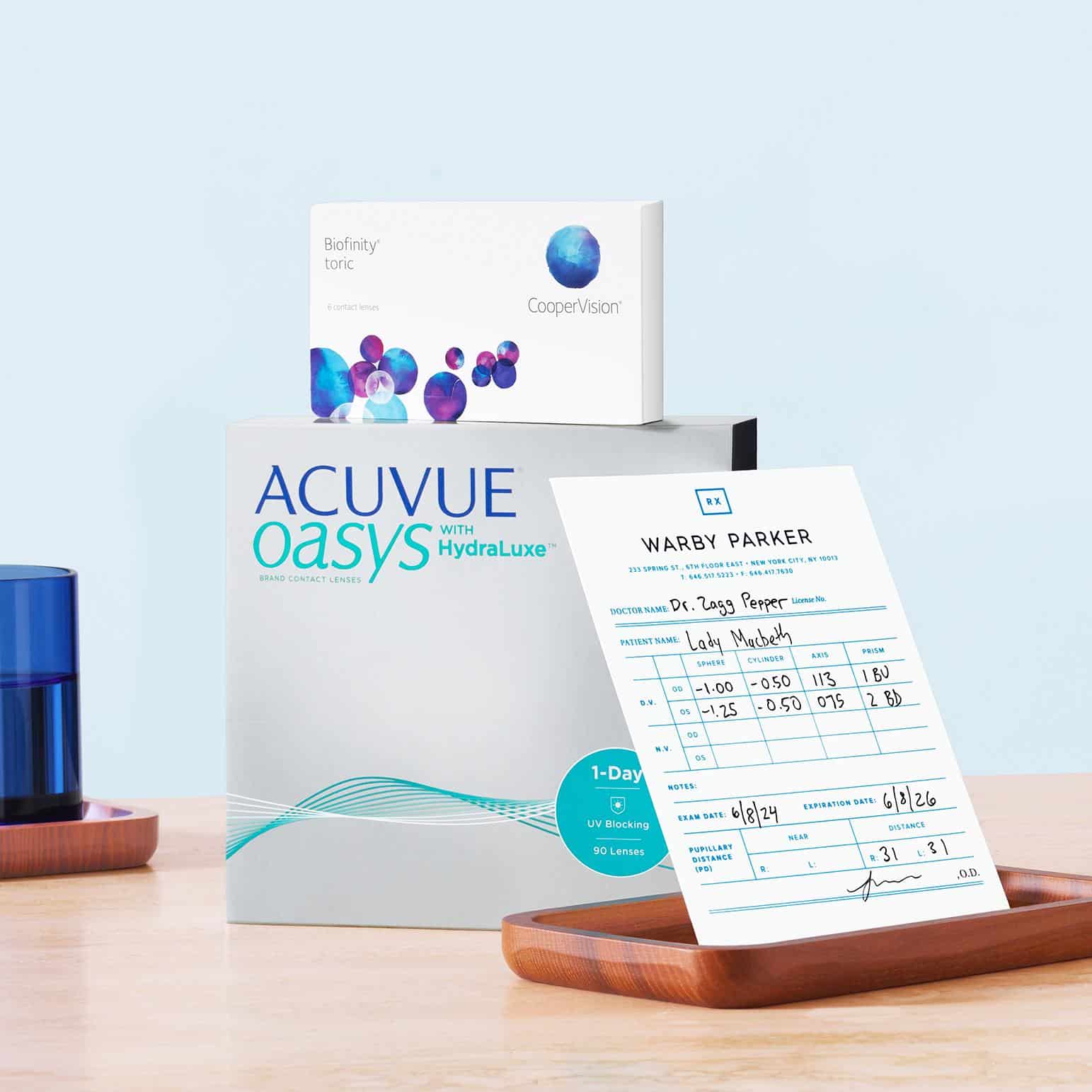
Keep variables identical: same brand, same Rx parameters, same supply length. That is what makes contact lens pricing comparison valid.
Example: a 90-day supply at $90 is $1.00 per day, while a 60-day supply at $72 is $1.20 per day. The second offer may look close at box level but loses on daily cost.
A simple worksheet makes this easy to repeat for online and retail offers.
Online Pricing and Contact Lens Quality Signals
Channel does not determine quality by itself. Brand matching and Rx verification do. If the lens brand and parameters match your prescription, product quality is tied to manufacturer standards, not whether you buy online or in-store.
Red flags include unnamed brands, skipped verification, and pricing that cannot be reconciled. Trust signals include transparent per-day totals and clear brand disclosure.
Subscription delivery is not automatically good or bad. It works when terms are clear, pause or skip controls exist, and costs stay visible.
Online vs Retail Contact Lens Cost in Plain Numbers
The clearest answer comes from the worksheet, not from promotional copy. Compare net per-day cost with identical assumptions, then choose the channel that wins on both price transparency and verification standards.
If numbers are nearly tied, go with the retailer that makes brand matching and Rx handling easiest to trust over time.
If you want a cleaner decision, run the same worksheet twice: once with optimistic assumptions and once with conservative assumptions. In the optimistic version, include full rebate completion and lowest shipping. In the conservative version, remove uncertain rebates and include realistic fees. When one channel still wins in both scenarios, you can choose with confidence because the outcome is resilient, not dependent on perfect execution.
Another useful approach is based on repeatability. If you had to reorder the same lenses next quarter, could you recreate the quoted price without guesswork? Offers that rely on one-time promotions, complicated rebate steps, or shifting terms may look strong once but weak over time. Stable pricing logic, clear reorder terms, and transparent brand matching make long-run cost easier to trust. This matters because contact purchasing is recurring by nature. A good choice for you is the one that stays understandable and predictable across multiple cycles.
Before you decide, document the exact assumptions you used so you can audit them later. Include shipping, timing, rebate certainty, and whether you compared equal supply lengths. Transparent assumptions turn a one-time choice into a reusable method, which is helpful when pricing changes. Good cost comparisons are repeatable whenever your prescription or ordering cadence shifts.
Looking for a new daily lens?
Find a contact that is breathable, comfortable, and affordable
MEDICAL DISCLAIMER: This content is provided for educational and informational purposes only and is not intended as medical advice, diagnosis, or treatment. This information should not be used to replace professional medical care or consultation. Individual results may vary significantly. Always consult with a qualified healthcare provider before making any decisions about your health, vision, or medical treatment. Never disregard professional medical advice or delay seeking treatment because of information you have read on this website.
VISION CARE DISCLAIMER: Vision correction needs vary by individual. Consult an eye care professional for personalized assessment and recommendations.
FDA DISCLAIMER: These statements have not been evaluated by the Food and Drug Administration. This content is not intended to diagnose, treat, cure, or prevent any disease or medical condition.
PROFESSIONAL CONSULTATION REQUIRED: Only qualified eye care professionals can provide personalized recommendations for your specific vision needs and health conditions.
This article is for informational purposes only. It is not intended to provide medical advice or substitute for professional health services. Warby Parker complies with all HIPAA regulations regarding your health information. For personal health questions or concerns related to your vision or eyewear prescriptions, please consult a qualified healthcare provider.
Frequently Asked Questions
Is it cheaper to buy contacts online or at the optical store?
Sometimes yes, sometimes no. The winner depends on net per-day cost after fees, rebates, insurance, and supply length are normalized.
What hidden costs appear in retail contact pricing?
Common hidden costs include membership requirements, rebate complexity, fitting-related fees, and restrictive autoship terms.
How do rebates and insurance affect the real price?
Rebates lower cost only after successful submission, and insurance varies by plan, so true comparison should focus on final out-of-pocket totals.
What's a good way to calculate per-day contact cost?
Divide total net supply cost by the number of wear days covered, using the same lens brand and prescription details in every comparison.