Prescription Lens Color for Sunglasses: Smart Tint Guide
The tint of sunglass lenses is more than just a cool style change, it also changes how bright conditions appear and how colors look. When you add a prescription into the mix, you suddenly have lots of new decisions to make.
This guide will help you cut through the confusion so you can choose a prescription lens color for sunglasses that fits how you actually live – how you drive, work, play sports, and relax outside.
We’ll outline how major lens colors are typically described, how you might think about tints in relation to your routine, and what extras – like polarization or photochromic lenses – can be considered for prescription sunglasses.
Sunglasses in a snap
We offer Clip-Ons—available in many sizes and colors—that fit our bestselling frames
What Matters Most Before Lens Color
When comparing gray, brown, or green, you may want to look for certain features that are commonly recommended for sunglasses, including UV ratings and protective coatings.
Next, you can consider lens material and coatings. Many prescription sunglasses use polycarbonate or high-index materials, and may include scratch-resistant and reflection-resistant coatings. These features don’t change the basic color of the tint, but they can support clarity and durability of the lenses.
Need a new pair?
Shop our latest sun shapes and colors
Once you’ve thought about UV filtering, lens material, and coatings, you can start comparing the appearance and general visual experience of different tints. Tint color is often treated as a way to fine-tune how the world looks through your lenses in different lighting conditions.
Common Prescription Sunglass Lens Colors and How They Tend to Look
Each lens color can change how bright conditions appear and how colors are perceived. Understanding these general tendencies may help you narrow choices, especially if you’re buying online and can’t try every tint in person.
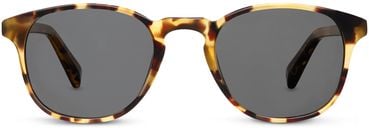
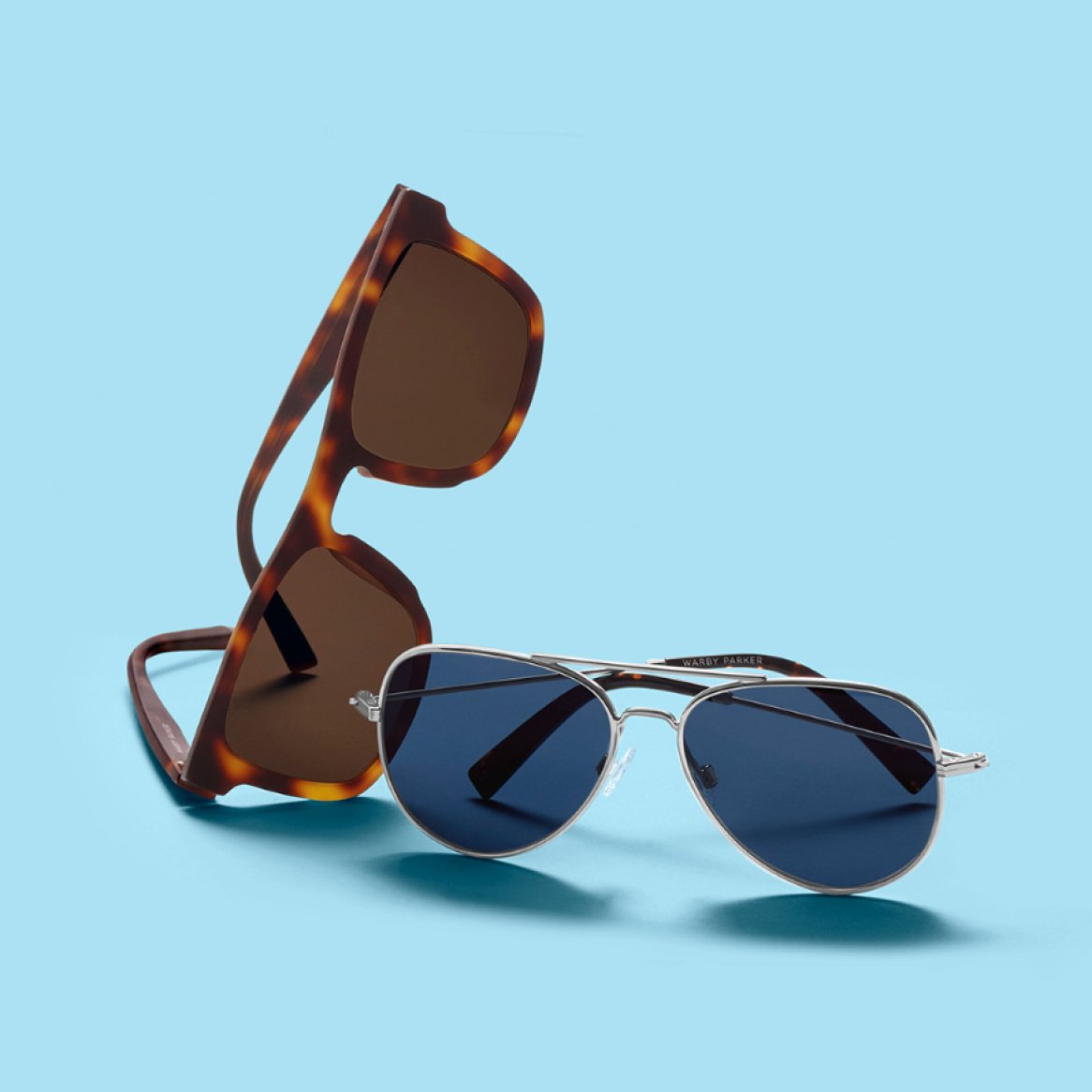
Neutral gray is a popular prescription lens color for sunglasses. It tends to reduce overall brightness while maintaining relatively natural-looking colors.
Looking to try '70s sunglasses?
Virtually find your perfect sunglasses anywhere, anytime
Brown or amber lenses add a warmer tone and can create a higher-contrast view that some people prefer, especially against blue skies or green landscapes. They’re commonly chosen for activities like hiking, spending time near the water, and everyday wear by people who like a slightly warmer, more defined look.
Green tints are often described as sitting somewhere between gray and brown. They generally keep colors looking fairly natural while adding a mild sense of contrast for some wearers. If you spend time in a mix of environments – city streets, parks, or near water – green tints can feel like a versatile, all-day option for many people.
- Gray: A common choice for bright conditions and for those who prefer a more neutral, true-to-life appearance.
- Brown/Amber: Often chosen by people who like a warmer, higher-contrast view, including for various outdoor activities.
- Green: Many people like green as a versatile tint that offers a balance between brightness reduction and relatively natural color.
Matching Lens Color to Your Lifestyle and Activities
Once you have a sense of how different colors generally look, you can think about how they might fit into your typical routine.
For daily commuting and time on the road, neutral gray or lighter brown lenses are commonly chosen. Many people prefer these tints if they like clear differentiation of traffic signals and road markings while also wanting to reduce overall brightness.
If you spend a lot of time outdoors for recreation, some people prefer specific tints for specific activities. For example, brown or amber tints are often selected by people who play sports like golf or who spend time hiking and on trails, because they may feel that these colors help them notice details in grass, trees, or uneven terrain. For water-based activities, some people like gray or green tints and may choose lenses with polarization for help with reflections from flat surfaces such as water.
Light conditions can also play a role in personal preference. In consistently bright, open environments (like beaches, boating areas, or snowy landscapes), people often choose darker gray or green lenses, sometimes with polarization, to manage overall brightness and reflections. On mixed or slightly overcast days, a medium brown tint may feel more visually engaging to some, versus the flatter look of very dark shades.
You can also think about how you typically feel in bright light. Some people prefer darker tints because they like a dimmer overall view outdoors, while others choose medium tints so they can move between bright and shaded areas without things feeling too dark.
Having problems reading?
If you’re struggling to bring words into focus, visit one of our expert optometrists for help
What to Remember When Choosing Prescription Lens Color for Sunglasses
Choosing a prescription lens color for sunglasses often starts with features like UV filtering and lens quality, and then takes your personal preferences and lifestyle into account. Many people gravitate toward gray for a more neutral, all-purpose look, brown or amber for a warmer and potentially higher-contrast view, and green for something in between.
As you shop, it may help to picture a typical day: commuting, working outdoors, spending time at the park, or playing a particular sport. You can use those scenarios to narrow down which tints you’re most interested in, and then compare them based on how they look and how you feel wearing them.
If you’re not sure where to start, consider talking with an eye care professional, who can share general information about lens options. You can also consider shortlisting two or three colors that seem to match your main activities and then use sample photos or virtual try-on tools to get a sense of which looks you prefer.
Need (or want) new glasses or sunglasses?
Virtually try on frames from home—or visit a nearby store
Legal Disclaimer
MEDICAL DISCLAIMER: This content is provided for educational and informational purposes only and is not intended as medical advice, diagnosis, or treatment. This information should not be used to replace professional medical care or consultation. Individual results may vary significantly. Always consult with a qualified healthcare provider before making any decisions about your health, vision, or medical treatment. Never disregard professional medical advice or delay seeking treatment because of information you have read on this website.
VISION CARE DISCLAIMER: Vision correction needs vary by individual. Consult an eye care professional for personalized assessment and recommendations.
FDA DISCLAIMER: These statements have not been evaluated by the Food and Drug Administration. This content is not intended to diagnose, treat, cure, or prevent any disease or medical condition.
PROFESSIONAL CONSULTATION REQUIRED: Only qualified eye care professionals can provide personalized recommendations for your specific vision needs and health conditions.
This article is for informational purposes only. It is not intended to provide medical advice or substitute for professional health services. Warby Parker complies with all HIPAA regulations regarding your health information. For personal health questions or concerns related to your vision or eyewear prescriptions, please consult a qualified healthcare provider.
What is a commonly chosen prescription lens color for sunglasses for driving?
Gray or light brown tints are commonly chosen for driving because many people feel they reduce overall brightness while still allowing them to distinguish traffic signals and road elements.
Are darker lens colors better for eye protection?
Not necessarily. UV filtering is related to the lens material and coatings, not just how dark the tint looks. Professional organizations often recommend checking for lenses that filter 99-100% of UVA and UVB rays, which is typically indicated on the product label or description.
Which lens color do people often find comfortable?
Comfort can be very subjective. Some people tend to prefer darker gray or brown lenses in bright conditions, and others like medium tints that feel more versatile throughout the day. If you have specific concerns about your vision or comfort, consider discussing them with an eye care professional.
Is green a good prescription lens color for sunglasses?
Many people consider green a solid everyday option because they feel it offers a balance between managing brightness and maintaining relatively natural color perception.
What lens color do people often choose for activities like golf or hiking?
Brown or amber tints are commonly chosen for golf, hiking, and trail activities. Some people feel that these tints make natural surroundings – like grass, trees, and paths – stand out more to them.
Need sunglasses?
Starting at $95, with free shipping.