Prescription Sunglasses vs. Clip-Ons: Comparison Guide
Prescription sunglasses are complete glasses with your corrective prescription built directly into tinted, UV-filtering lenses. They function just like your everyday glasses, but made for outdoor light.
Clip-ons, by contrast, attach to the front of your existing prescription glasses. They can be magnetic, flip-up, or spring-loaded. The idea is simple: you keep one pair of regular glasses, and add a tinted or polarized layer only when you step into bright light.
Both approaches are commonly used to reduce brightness and glare, but they do it differently. Prescription sunglasses may offer a wider field of view and a single-lens design that some wearers prefer. Clip-ons add another layer in front of your lenses, which can introduce small reflections, extra weight, or misalignment if the fit is not precise.
For many people, the decision starts with lifestyle questions. If you spend long hours driving, on the water, or outdoors for work, having a separate pair of sunwear can feel straightforward to use. If your time in bright sun is limited or unpredictable, clip-ons can be an efficient add-on to the glasses you already own.
Want to protect your eyes from glare?
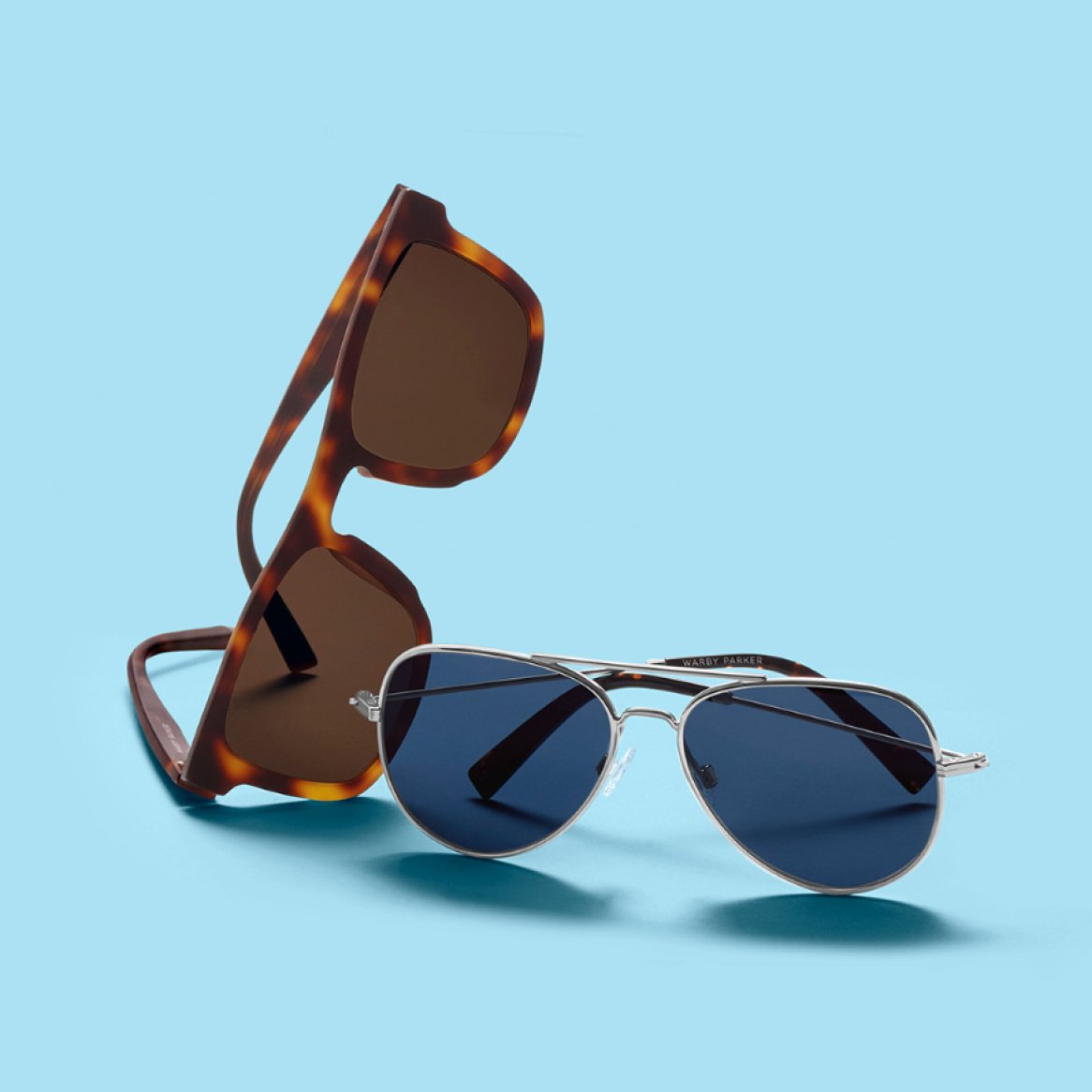
Try polarized sunglasses
UV Filtering, Glare, and Sunwear Basics
Whichever route you choose, one factor should never be negotiable: verified UV filtering.
High-quality prescription sunglasses ordered through an eye-care provider are usually specified to meet these standards, and the UV-filtering properties can be built directly into the lens material or coating.
Clip-ons can also be an option when they are properly labeled and made to an appropriate standard.
Sunglasses have come a long way
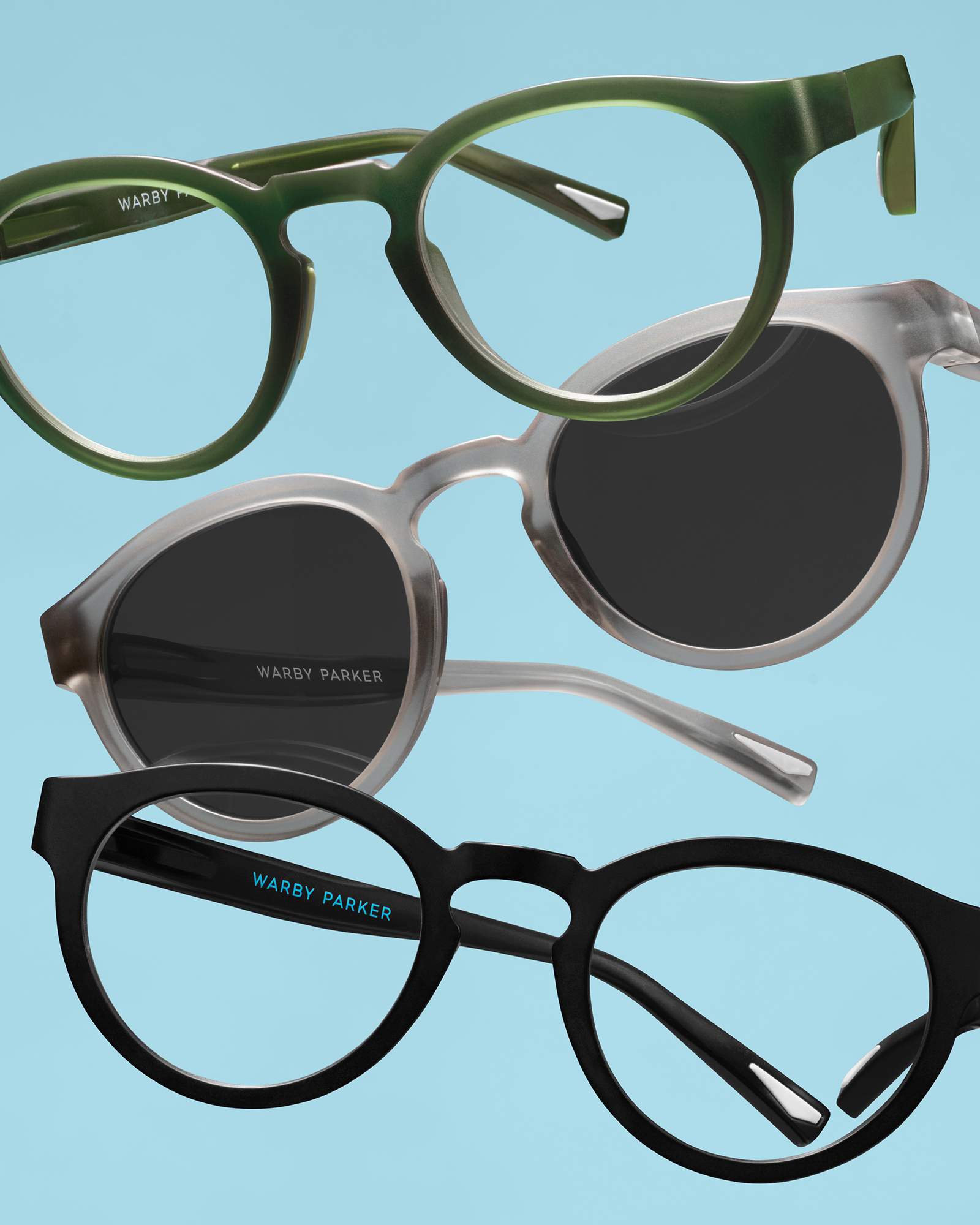
We have endless shapes and colors to choose from
Glare is another key factor, particularly if you drive or spend time on water or snow. Polarized lenses in either prescription sunglasses or clip-ons are commonly used to reduce reflected glare and may improve visual comfort for some wearers. The critical step is to confirm that, beyond polarization or tint, there is true 99-100% UVA/UVB filtering as recommended by major eye-health organizations.
Practical Trade-Offs: Cost, Convenience, and Style
For many wearers, the choice between prescription sunglasses and clip-ons comes down to budget and day-to-day convenience. A dedicated pair of prescription sunglasses typically costs more upfront, because you are purchasing another full set of lenses and frames. In return, you have a separate pair of glasses for bright conditions, without attachments to keep track of.
Clip-ons are generally more affordable, especially branded or custom-fit ones sold alongside your regular frames. They can be a sensible starting point if you are not ready to invest in a second pair of prescription glasses, or if your prescription is likely to change soon.
From a convenience perspective, clip-ons win on minimalism in your bag but can lose on handling. You need to attach, remove, and store them without scratching, and they can be easy to misplace. Prescription sunglasses require you to carry a second case, but using them is as simple as switching glasses when you step outside.
Want to try sunglasses? It's free.
Virtually try on sunglases—anytime, anywhere
Style and coverage also matter. Research on wraparound and larger lenses shows they reduce peripheral UV exposure more effectively than small, flat designs. Dedicated sunwear often gives designers more freedom to create larger, more protective shapes, while clip-ons are constrained by the size and shape of your everyday frames.
What to Remember: Prescription Sunglasses vs Clip-Ons
When you compare prescription sunglasses vs clip-ons, both options can be used in bright conditions when they offer UV filtering consistent with major guidelines, good optical quality, and a secure, comfortable fit. Many people find that prescription sunglasses offer a straightforward experience and may provide a wide field of view and coverage, depending on the frame and lens design. Some people prefer clip-ons as a flexible, lower-cost option for occasional bright-light situations when they want to keep a single pair of prescription glasses.
The most important next step is to discuss your daily routine and driving habits with an eye-care professional if you have questions or concerns about UV filtering and lens options. They can help you confirm UV ratings, lens quality, and frame coverage for whichever option you prefer, and advise whether a single solution – or a combination – fits best.
One approach some people use is to start with high-quality clip-ons to see how often they use sunwear, and then decide later whether to purchase a separate pair of prescription sunglasses. And if you’ve already chosen, share your experience or questions – your insights can help others make a clearer, more confident decision about their sunwear.
Looking for sunglasses?
See how your favorite frames look on you—instantly!
Legal Disclaimer
MEDICAL DISCLAIMER: This content is provided for educational and informational purposes only and is not intended as medical advice, diagnosis, or treatment. This information should not be used to replace professional medical care or consultation. Individual results may vary significantly. Always consult with a qualified healthcare provider before making any decisions about your health, vision, or medical treatment. Never disregard professional medical advice or delay seeking treatment because of information you have read on this website.
VISION CARE DISCLAIMER: Vision correction needs vary by individual. Consult an eye care professional for personalized assessment and recommendations.
FDA DISCLAIMER: These statements have not been evaluated by the Food and Drug Administration. This content is not intended to diagnose, treat, cure, or prevent any disease or medical condition.
PROFESSIONAL CONSULTATION REQUIRED: Only qualified eye care professionals can provide personalized recommendations for your specific vision needs and health conditions.
This article is for informational purposes only. It is not intended to provide medical advice or substitute for professional health services. Warby Parker complies with all HIPAA regulations regarding your health information. For personal health questions or concerns related to your vision or eyewear prescriptions, please consult a qualified healthcare provider.
Need sunglasses?
Starting at $95, with free shipping.