Glasses for Narrow Faces: Sleek, Balanced Fit
If every pair of glasses you try on feels too wide for your face, or slides down your nose, or overwhelms your features, you may have a narrow face. But you are definitely not alone. You just need to understand how certain frame proportions create a more defined and balanced appearance for your type of face, while others can feel out of scale.
This guide is designed to help you confidently choose glasses for narrow faces, whether you’re shopping online or in-store. We’ll focus on both style and general fit considerations, with the aim of helping you find frames that look and feel good for everyday wear.
When you understand which elements often work well for narrow faces such as frame width, bridge size, lens shape, and materials you can stop guessing and start shortlisting styles that may be a good starting point for your search.
We’ll walk through how to get basic measurements, what frame dimensions to look at, frame shapes that are commonly chosen for narrow faces, and a few frequent sizing missteps. You’ll finish with a simple checklist you can use on any product page or at any optical shop.
How to Tell If You Have a Narrow Face (and Why Fit Matters)
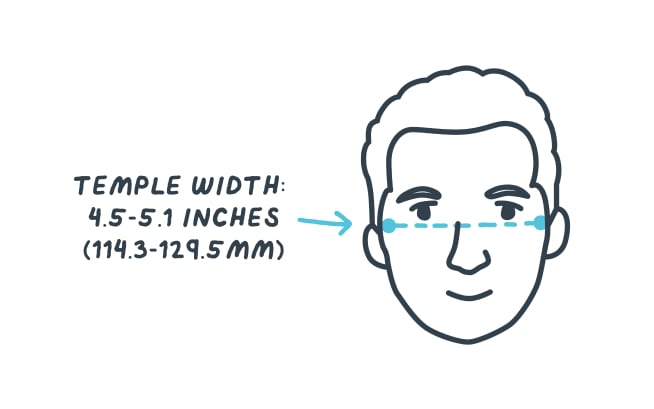
A narrow face is typically smaller in width from temple to temple, often with slimmer features and less distance between the eyes. If standard “medium” frames routinely look or feel oversized gaps at the sides, lenses extending far past your cheekbones you may fall into the narrow-face category.
From a fit perspective, a common guideline is for overall frame width to be reasonably close to your head width so the glasses sit in place without noticeable pinching or frequent slipping. General guidance on spectacle lenses and frames notes that frame width, bridge size, and temple length should correspond to face width so that weight is distributed across the frame and the eyes are reasonably well positioned in the lenses.
Looking for lenses?
From high-index and light-responsive to blue-light-filtering—we’ve got your eyes covered
Visually, frames that are much wider than your face can make a narrow face appear even slimmer, with your eyes seeming closer together within the lens area. By contrast, a frame that roughly matches your facial width can create a sleeker, more tailored look.
If you already own a pair that feels “almost right,” you can use it as a starting point. Check the numbers printed inside the arm (for example, 47-18-140) and use those as a reference when comparing new frames. Staying close to those measurements can help you find a comfortable fit.
Frame Dimensions for Narrow Faces
Frame dimensions are where many narrow-faced wearers run into trouble. The key numbers are lens width, bridge width, and temple length, along with overall frame width. For a narrow face, you’ll usually be looking at smaller frame sizes rather than standard medium.
Consumer sizing guides note that small lenses (often around 40-48 mm lens width) correspond to smaller or narrow faces, so the frame front typically doesn’t extend far past your temples. According to one chart, frames described as “Small: 40-48 mm lens width” tend to be suggested for face widths under roughly 129 mm,right in the range for many narrow faces.
- Lens width: Consider the lower end of typical ranges (about 40-48 mm) so the frame front doesn’t extend dramatically beyond your face.
- Bridge width: Bridges in the 15-18 mm range are often used on slimmer noses and may help keep lenses closer to centered in front of your eyes.
- Temple length: If you already have a pair that feels comfortable, look for similar temple lengths; small adjustments of around 5 mm or less tend to be easier to adjust to.
- Total width: A general rule of thumb is that the frame should be only slightly wider than your face, with minimal gap at the temples.
Keep in mind that “narrow” in product descriptions can mean different things from brand to brand. Always confirm using the actual millimeter measurements listed, not just the descriptive label. When shopping online, you can often filter by small frame size or narrow fit, then double-check the numbers before you buy.
Frame Shapes and Styles Often Chosen for Narrow Faces
Once you’ve narrowed down the size, shape is where you can really refine your look. Narrow faces are often paired with frames that add a bit of visual width and presence while still feeling in proportion.
Want to protect your eyes from glare?
Try polarized sunglasses
Soft rectangular, subtle cat-eye, and gentle oval frames are commonly chosen for narrow faces. These styles can create the effect of slightly more width and may draw more attention to your eyes, especially when your eyes appear reasonably centered in each lens opening,a detail that general frame guidelines highlight as a sign of balance and alignment, noting that your eyes should be centered within the lens openings.
For a minimalist, sleek look, you might consider thin acetate or metal frames with narrow rims. Transparent, soft tortoise, or muted metal tones (such as rose gold or gunmetal) are popular choices because they don’t visually dominate a slim face. Bolder colors can still work, just keep the frame size on the smaller side so the overall footprint stays in harmony with your features.
If your face is both narrow and short, you might prefer to skip very tall lenses and oversized round shapes, which can visually dominate your features. If it’s narrow and long, a slightly deeper lens can add some balance. Think of shape as fine-tuning: size helps with general comfort and alignment, while shape refines your style.
Key Takeaways and Next Steps for Narrow-Face Frames
Choosing glasses for narrow faces often comes down to three key considerations: scaled-down dimensions, roughly centered eyes, and shapes that add a sense of balanced width.
Look for lens widths often around 40-48 mm, a relatively petite bridge, and an overall frame width that’s close to your face width so the frame sits close to your temples without noticeable gaps.
As a next step, measure a pair you already own or your face width, then shortlist frames whose numbers are similar. Use filters for “small” or “narrow” fit when available, and apply a quick check: Do the lenses appear centered on your eyes, and does the frame extend only slightly beyond your face?
Not sure which glasses to get?
Vitually try on frames in the comfort of your own home
If you’re still unsure, you can visit an optician and ask for help assessing your face width and frame size options, or start a virtual try-on session and compare photos side by side. Use the ideas in this guide as a general checklist.
Frequently Asked Questions
What frame size is often recommended for a narrow face?
Small frames with lens widths roughly in the 40-48 mm range and a relatively petite bridge (around 15-18 mm) are commonly used for narrow faces, as they can help keep the overall frame width closer to your face width.
Which frame shapes are often chosen for narrow faces?
Soft rectangular, gentle cat-eye, and oval frames are often chosen for narrow faces because many people find they add a bit of visual width and emphasize the eyes without dominating their features.
How might glasses sit on a narrow face?
On many narrow faces, frames that are only slightly wider than the face, with minimal gap at the temples and eyes appearing reasonably centered in the lenses, tend to look well-proportioned. The frame should rest comfortably without sitting heavily on the cheeks or digging into the nose.
Are oversized glasses suitable for narrow faces?
Very oversized frames can sometimes feel or look large on narrow faces, making features appear smaller by comparison. Slightly larger styles can still work for some people if the total width feels in line with their face and the proportions match their style preferences.
Can round glasses work on a narrow face?
Yes. Many people with narrow faces wear round glasses. Smaller round frames with modest lens height are often chosen, while very large circles that extend far past the cheekbones may look more dramatic and out of proportion for some wearers.
What frame materials are commonly used for narrow faces?
Lightweight acetate, thin metal, or titanium frames are frequently chosen for narrow faces. These materials can create a more refined look and may feel lighter on a smaller, narrow face.
Citations
How glasses should fit & measurements explained , Warby Parker (fit basics & frame dimensions): https://www.warbyparker.com/learn/how-should-glasses-fit
This article is for general informational and style guidance only and is not intended as medical or vision advice. It does not diagnose, treat, cure, or prevent any condition and does not take into account your individual vision needs or prescription. Always consult an eye care professional for questions about your vision, eye health, or which lenses and frames are appropriate for you. In an emergency, contact your local emergency services immediately.
Need Glasses?
Shop prescription glasses starting at $95