Building a Sunglasses Collection That Actually Works
Most people don’t buy sunglasses with a plan. You just grab a pair for vacation here, an impulse purchase there – until you have a drawer full of styles you rarely wear. Building a sunglasses collection on purpose is different: each pair has a clear place in your lineup.
This guide will show you how to approach sunglasses like a small, functional wardrobe. Instead of chasing trends, you’ll learn to consider factors like widely available UV information, general comfort, and personal style, so that a small set of pairs can feel appropriate for many different parts of your week.
We’ll walk step by step through building a sunglasses collection that starts with UV-related information from public health sources and other sun-safety guidance, then layers on shape, color, and occasion-specific pairs. You’ll see how to read labels, understand lens features, and avoid overlapping purchases that don’t add value.
Protect those peepers
Our sunglasses provide 100% UV protection
By the end, you’ll know exactly which core pairs to prioritize, which “nice-to-have” additions genuinely expand your options, and how to shop strategically so your collection stays both stylish and sensible over time.
Start with Non‑Negotiables: Protection and Fit
Before you think about colours or frames, start with the basics that many public health sources highlight when talking about sun-related eye safety. Coverage matters. Larger lenses or wraparound shapes can reduce how much sunlight reaches the eyes from the sides, and they can cover more of the skin around the eyes. Public health guidance also notes that sunglasses are part of year-round sun safety and are often described as one part of broader sun-safety habits related to the eyes and the surrounding skin, on both sunny and cloudy days.
Next, check fit. A pair that slides down your nose, pinches behind your ears, or sits crooked will spend more time in a case than on your face. Aim for frames that sit comfortably on the bridge of your nose, follow the line of your brow, and lightly touch (not squeeze) behind the ears. Small fit tweaks from an optical professional may change how the frames feel over the course of a day.
When you’re looking at potential additions to your sunglasses collection, many people find it helpful to use criteria such as: clearly labeled UV information, frame shapes that provide coverage in a way they like, and a fit that feels comfortable enough for their typical activities. Once you’ve considered those factors, you can safely focus on style and variety.
Protect those peepers!
Our sunglasses come with a scratch-resistant coating and block 100% of UV rays
Define Your Core Set: Everyday, Active, and Travel
A smart collection begins with a small “core set” that matches how you actually live. For many people, three roles cover most needs: an everyday pair, an active or sport pair, and a travel or weekend pair with a bit more personality.
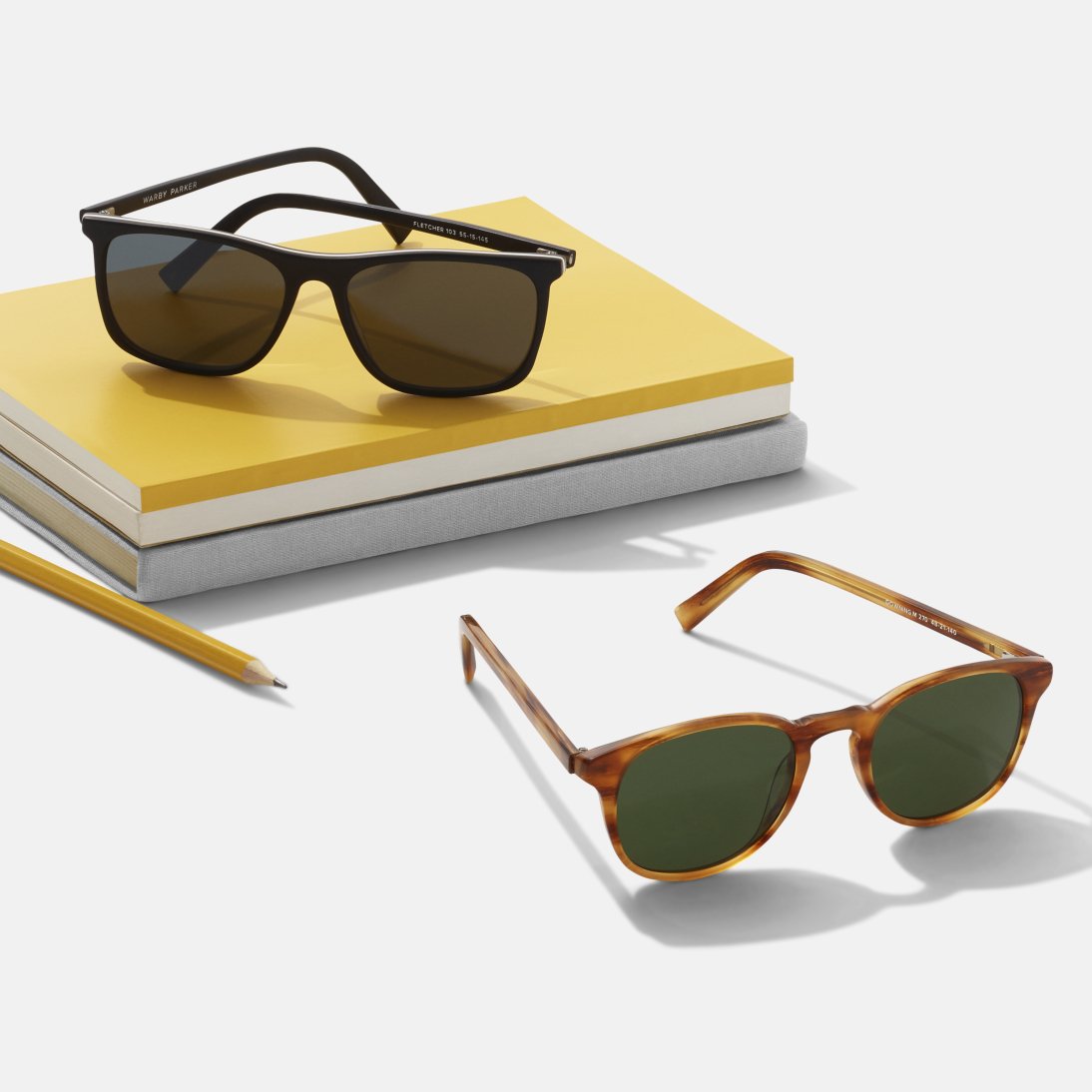
Your everyday pair is the workhorse. Choose a versatile frame in a neutral colour that suits both casual and smart outfits – think classic wayfarer, rounded square, or subtle cat-eye. Prioritise comfort and a tint that feels natural for driving and walking around town. Professional organisations note that many people look for lenses that screen out a large proportion of visible light so the environment feels more manageable in bright conditions for many people.
Next, add an active or sport-focused pair. Look for lightweight, more durable materials, secure nose pads, and frames that hug the face. This is where features like polarized sunglasses are often chosen by people who spend time running, cycling, or on the water. Polarized lenses are designed to reduce glare from flat surfaces such as roads and water, but as Harvard Health notes, they do not inherently add UV filtering – you still need to pay attention to the UV information on the label.
Need sunglasses?
Protect those peepers from the sun’s harmful rays with 100% UV-blocking sunglasses
Finally, consider a travel or “elevated casual” pair. This might lean more fashion-forward – a bolder shape, gradient tint, or metal frame – but should still reflect the same UV and fit considerations you apply elsewhere. The goal is a pair that feels special yet wearable with most outfits in your suitcase.
- Everyday pair: A neutral style for work and errands.
- Active/sport pair: Secure fit with optional polarization for outdoor activities.
- Travel pair: A statement or elevated-casual style that still feels versatile.
Use Style, Shape, and Colour to Add Real Variety
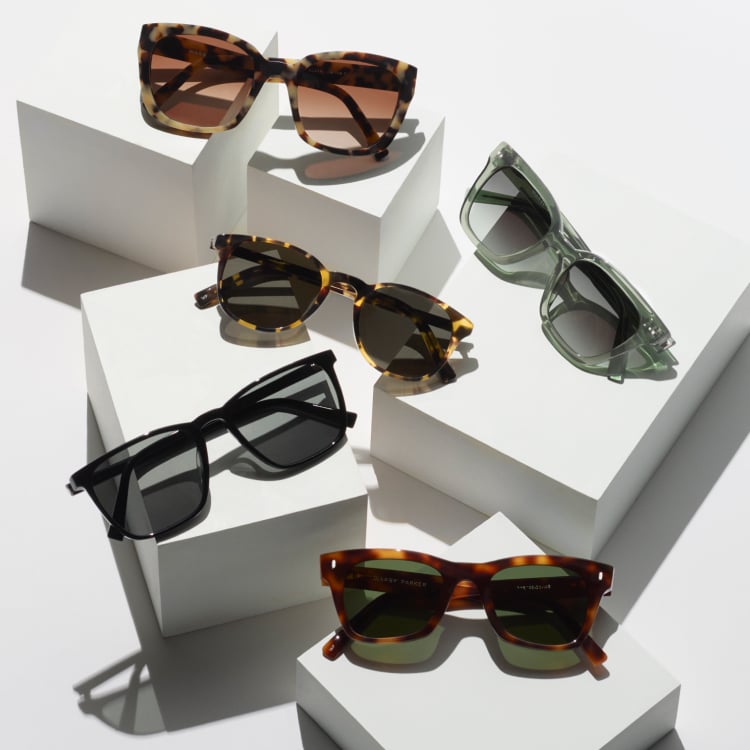
Once your core set is covered, new additions should expand your styling options, not duplicate what you already have. Start by mapping what you own: note shapes (round, square, aviator), frame colours, and lens tints. If every pair is black and angular, a softer, rounded tortoiseshell frame may add more value than yet another dark square style.
Face shape guidelines can be useful, but treat them as suggestions rather than strict rules. In general, contrast is flattering: softer faces often suit more structured frames, while sharper features can balance well with rounder or oval designs. The most important test remains simple: do you feel confident in them, and do they stay comfortable on your face?
Lens tints are another way to diversify. Grey lenses keep colours truest and work well for driving. Brown or amber can add warmth and improve depth perception in certain outdoor settings. Gradient lenses (darker at the top, lighter at the bottom) are often chosen by people who move between bright streets and shaded interiors, though preferences can vary in very bright conditions.
Need sunglasses?
Starting at $95, with free shipping.
Key Takeaways and Next Steps for Building a Sunglasses Collection
When you treat sunglasses as both a practical accessory and an expression of personal style, informed by public information about UV ratings and sun exposure, building a sunglasses collection becomes straightforward. Many public health sources recommend looking for sunglasses with 99-100% UVA and UVB filtering (sometimes labeled as UV400), along with frame shapes and fits that align with your day-to-day activities.
From there, you can think in terms of a core trio that matches your lifestyle – an everyday neutral, an active or sport-oriented pair, and a versatile travel or statement option. Additional frames can then be chosen to introduce something genuinely different: a new shape, colour, lens tint, or general use-case you don’t already have covered.
If you’d like to refine your lineup, you might start by reviewing what you already have against the types of criteria described above. You may decide to set aside anything that does not meet the UV rating or fit criteria that matter most to you, then fill the most obvious gaps first. Over time, this kind of intentional approach can help you build a compact set of sunglasses that you reach for every day, not a cluttered box of maybes.
Looking to try '70s sunglasses?
Virtually find your perfect sunglasses anywhere, anytime
Legal Disclaimer
MEDICAL DISCLAIMER: This content is provided for educational and informational purposes only and is not intended as medical advice, diagnosis, or treatment. This information should not be used to replace professional medical care or consultation. Individual results may vary significantly. Always consult with a qualified healthcare provider before making any decisions about your health, vision, or medical treatment. Never disregard professional medical advice or delay seeking treatment because of information you have read on this website.
VISION CARE DISCLAIMER: Vision correction needs vary by individual. Consult an eye care professional for personalized assessment and recommendations.
FDA DISCLAIMER: These statements have not been evaluated by the Food and Drug Administration. This content is not intended to diagnose, treat, cure, or prevent any disease or medical condition.
PROFESSIONAL CONSULTATION REQUIRED: Only qualified eye care professionals can provide personalized recommendations for your specific vision needs and health conditions.
This article is for informational purposes only. It is not intended to provide medical advice or substitute for professional health services. Warby Parker complies with all HIPAA regulations regarding your health information. For personal health questions or concerns related to your vision or eyewear prescriptions, please consult a qualified healthcare provider.
How many pairs do I need when building a sunglasses collection?
Most people do well with three to four pairs: an everyday neutral, an active or sport pair, a travel or dressier pair, and optionally a bolder fashion style if you enjoy experimenting.
What is the most important feature when choosing sunglasses?
Many public health sources emphasize UV-related information as one of the most important aspects of sunglasses. People often look for labels indicating 99-100% UVA and UVB filtering or UV400 when comparing options, and then consider factors like coverage, fit, and style preferences.
Do I really need polarized lenses in my collection?
Polarized lenses are not required, but some people prefer them for driving, spending time on or near water, or in snowy environments because they are designed to reduce glare from flat surfaces. Polarization is separate from UV information, so it’s still important to pay attention to the UV details listed on the label.
How can I avoid buying duplicate styles?
Before purchasing, compare the new pair to what you own. If it doesn’t add a new shape, colour, lens tint, or use-case, consider passing.
Are expensive sunglasses always better?
Price alone does not determine the UV information listed on the label. Many shoppers review the stated UV ratings and other product details when comparing options, rather than focusing only on price.