Does Vision Insurance Cover Contacts?
For most people, the answer to that question is usually yes. Vision insurance usually includes some form of contact lens benefit.
What matters is what “covered” actually means for your plan and your wear schedule. A benefit on paper does not always translate into real savings, and the useful question is whether your allowance beats buying direct while keeping prescriptions and orders in one place.
Need new contacts?
We carry dozens of top brands
If you already wear Warby Parker glasses, you may want contacts in the same account so you are not juggling another login, another Rx file, or another customer service line. That makes sense. Just check the math before you assume insurance is automatically the better deal. Sometimes it is. Sometimes the brochure sounds more generous than the numbers work out to be.
What Vision Plans Usually Mean by Contact Lens Coverage
Most employer plans list contacts as a materials benefit, which might show up as a dollar allowance, a set number of boxes per year, or reimbursement after you buy and submit paperwork.
Plans vary more than a quick benefits summary suggests. One employer might offer a solid annual cap, while another might limit you to a handful of boxes. Your summary plan description is the document that defines the benefit. The marketing page is only a starting point.
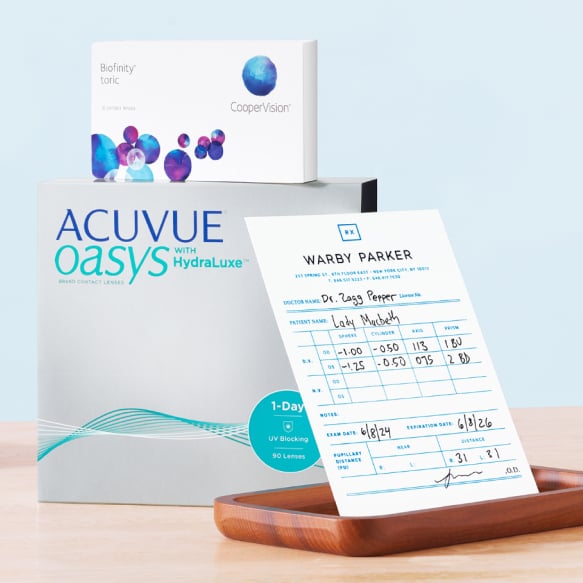
Coverage on paper is also separate from having a valid contact lens prescription. Insurance rules do not replace an exam or the full Rx fields a retailer needs to ship the right lenses. You can have a covered benefit and still wait on verification if your paperwork is incomplete or out of date.
Interested in dailies?
Talk to your eye doctor about making the switch
How Allowances, Copays, and Either/Or Rules Shape What You Pay
This is usually where people feel surprised by the details.
Your allowance might be a dollar cap or a fixed box count for the benefit year, and copays can apply per box or once per year. If you wear daily lenses, those per-box copays can add up quickly, so it helps to run the numbers before you count on the plan to cover most of the cost.
Many plans also ask you to choose between contacts and glasses benefits within the same period rather than funding both at full strength. That is normal plan design, not a hidden catch. It helps to decide which product you are actually using your benefits for before you buy both and hope the plan covers everything.
Toric and multifocal lenses often draw down an allowance faster than standard lenses, and daily wearers can burn through an annual cap sooner than they expected. Unused allowance usually does not roll over either, so a late-year stock-up only works if your plan document allows it.
In-Network Purchase vs Out-of-Network Reimbursement
You generally have two paths, and the right one depends on your brand, your routine, and how much hassle you want in the mix.
In-network purchase means buying through a plan-affiliated retailer with the allowance applied at checkout. When your brand is available and the copay stays low, that path can be straightforward because you see the discounted price before you pay.
Out-of-network purchase means buying where you prefer, including through an online subscription, and filing for partial reimbursement up to your plan limit. Out-of-network contacts reimbursement often makes sense when in-network options do not carry your brand, or when you want pause, skip, and delivery control without repeating a full benefits workflow every year.
Interested in daily contact lenses?
Consider our selection of daily contacts for lasting hydration
Either way, compare what you would pay per day after benefits to what you would pay without them. A larger allowance you never fully use is not much of a win if a steady subscription at a clear price fits your life better.
Adding Contacts to the Account You Already Use
If Warby Parker already holds your glasses and exam history, adding contacts does not have to mean starting over with a separate vision setup.
One account keeps prescriptions, orders, and reorders in the same place, which is often the goal if you are already part of the ecosystem. A contact lens Rx on file from a recent exam can speed up verification when it is still valid and complete, though a glasses Rx alone is not enough. Contacts require brand, base curve, diameter, and the other fields your retailer and plan both expect.
Subscription pause and skip let you align shipments with how you actually wear lenses, not only with when your insurance year resets. Seeing per-day pricing alongside your benefits math keeps the comparison honest, and FSA or HSA funds may apply whether you use plan allowance or buy direct, depending on your plan rules.
Have you considered dailies?
No sweat. No mess. No cleaning solution required.
What to Check Before You Choose a Path
Start with your plan document rather than a forum post or a coworker’s memory of what their plan covers.
Look for allowance size, copay structure, and whether glasses and contacts share one benefit bucket in the same period. Run the numbers against your real annual supply for your brand and modality, because a vision plan contacts allowance that covers four boxes will not go far if you wear daily lenses year-round.
Confirm your contact lens Rx is current and complete before you order, since verification with your doctor typically takes days rather than minutes. Starting the upload about a week before you run out reduces the chance of a gap while you wait for approval.
From there, choose the path that fits your math and your routine: in-network retail, out-of-network purchase with reimbursement, or a direct subscription in the account you already use. Warby Parker Contacts supports verified Rx upload, subscription controls, and documentation if you file out of network later. The goal is steady supply at a cost you understand, not coverage that looks good on paper and feels confusing at checkout.
Never shopped with us before?
Get 20% off your first contacts order
Legal Disclaimer
MEDICAL DISCLAIMER: This content is provided for educational and informational purposes only and is not intended as medical advice, diagnosis, or treatment. This information should not be used to replace professional medical care or consultation. Individual results may vary significantly. Always consult with a qualified healthcare provider before making any decisions about your health, vision, or medical treatment. Never disregard professional medical advice or delay seeking treatment because of information you have read on this website.
VISION CARE DISCLAIMER: Vision correction needs vary by individual. Consult an eye care professional for personalized assessment and recommendations.
FDA DISCLAIMER: These statements have not been evaluated by the Food and Drug Administration. This content is not intended to diagnose, treat, cure, or prevent any disease or medical condition.
PROFESSIONAL CONSULTATION REQUIRED: Only qualified eye care professionals can provide personalized recommendations for your specific vision needs and health conditions.
This article is for informational purposes only. It is not intended to provide medical advice or substitute for professional health services. Warby Parker complies with all HIPAA regulations regarding your health information. For personal health questions or concerns related to your vision or eyewear prescriptions, please consult a qualified healthcare provider.
Does vision insurance cover contact lenses?
Most plans do, usually through an allowance, box benefit, or reimbursement. Many treat contacts as an alternative to glasses coverage in the same benefit period.
How much does vision insurance pay toward contacts?
It depends on your plan. Check your allowance size, copay, and box limits, then subtract copays before you compare the net benefit to direct pricing.
Is there a difference between glasses and contacts coverage on the same plan?
Yes. Many plans use either/or rules rather than full dual coverage within the same benefit year.
Does vision insurance cover both glasses and contacts in the same year?
Sometimes, but often only partially. Many plans limit how much you can apply to both, and your plan document defines the details.
Need Glasses?
Shop prescription glasses starting at $95