How Does the Eyewear Business Model Affect Contact Lens Prices?
Updated: July 28, 2026
Contact lens prices make a lot more sense when you take a moment to understand how the retailer makes money. Some models rely on layered markups and rebate complexity. Others emphasize logistics, verification, and transparent per-day pricing on known manufacturer brands.
That difference is why the eyewear business model explained in plain language matters to shoppers. It helps you separate real value from presentation tactics before you commit to a reorder system.
Traditional contact retail stores often layered wholesale distribution, in-store sales overhead, and promotional rebate structures. Modern online contacts business models tend to simplify pricing around supply cost, service, and fulfillment.
How eyewear companies make money in these newer systems is usually straightforward: carry inventory, verify prescriptions, process orders, and deliver consistently. That does not mean every provider is transparent, but it gives you a framework for evaluating claims.
The contact lens industry includes both approaches, so recognizing the model behind the pricing is a practical shopper skill.
Considering contacts?
We happen to know some expert optometrists who can help you weigh your options
Model literacy helps you identify fairness quickly. If a retailer cannot explain what the price includes, whether brands are named, or how verification works, you are operating in opacity.
Fair contact pricing should be measurable with simple math. You should know brand, supply length, shipping assumptions, and whether subscription pricing changes over time.
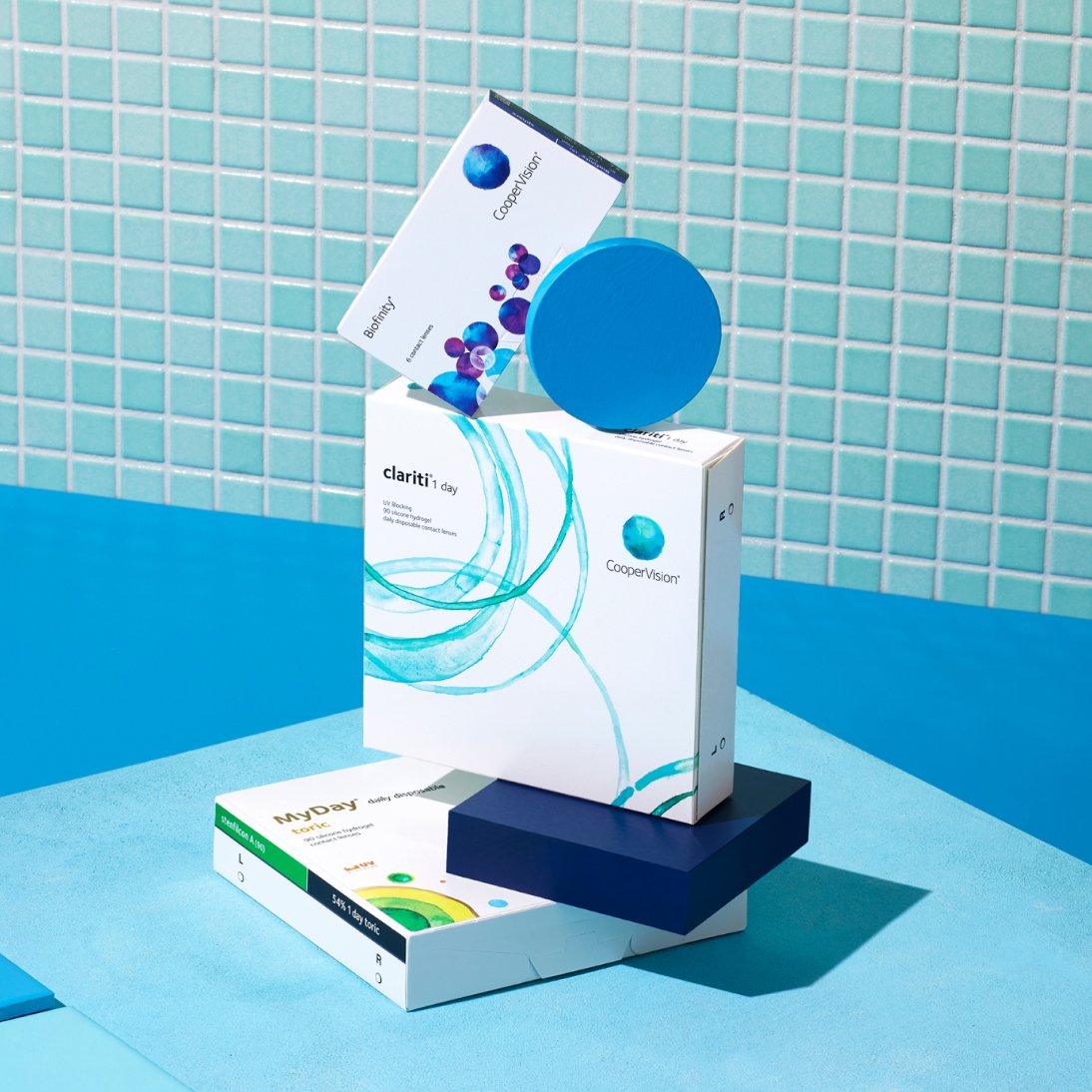
Manufacturer contact brands are a key trust signal. Named products tied to your prescription are much easier to evaluate than generic labels.
Per-day comparisons only work when supply periods match. This single check eliminates many misleading “cheap” claims.
Online Contact Subscriptions: Trap vs Convenience
A contact lens subscription model is useful when it behaves like logistics support, not lock-in. Good subscriptions make price visible, name manufacturers, and give real pause or skip control.
Trap signals are usually operational: difficult cancellation, unexpected price shifts, unclear product sourcing, or terms that are hard to find before checkout.
One-time orders and subscriptions should produce similar per-day math for the same product. The real difference is convenience, not lens quality.
Looking for prescription colored contacts? We've got those.
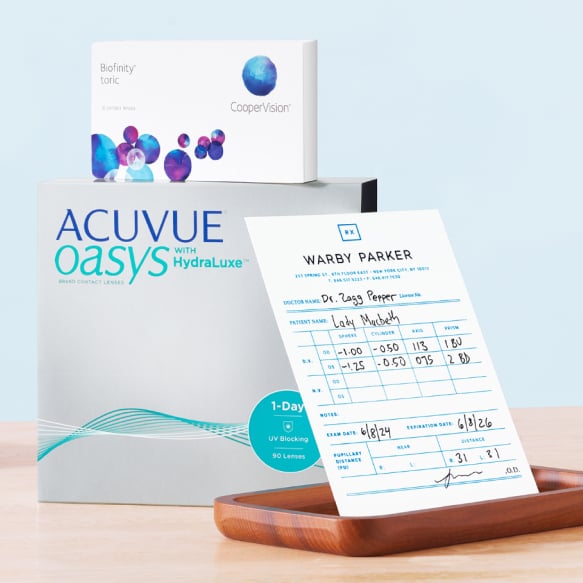
Trustworthy retailers list manufacturer brands clearly because your prescription references a specific lens family. Brand matching is not an optional detail. It is core to safe and accurate ordering.
Mystery labels or unnamed alternatives should trigger caution. If your doctor prescribed a toric or multifocal product, confirm that exact product line is available before you begin checkout.
This is where business model and trust intersect. Retailers built around transparency make brand verification easy. Retailers built around opacity make it difficult.
One Vision Home for Glasses and Contacts
One vision home means managing glasses, exams, and contacts in one account environment instead of splitting records across multiple vendors.
That consolidation reduces friction when done well. Upload once, verify once, and reorder with less duplicate paperwork. It also makes total spend easier to evaluate when both glasses and contacts pricing are visible in one place.
For shoppers already comfortable with one provider for eyeglasses, adding contacts can be a practical extension as long as brand transparency and verification standards remain strong.
Shop contact lenses
Shop daily, bi-weekly, and monthly optiojns from the top brands
Convenience does not replace clinical follow-up, but it does make routine ordering simpler.
Model factor
Traditional
Modern
Markup structure
Stacked retail plus rebates
Per-day on named brands
Brand transparency
Often opaque
Manufacturer names listed
Subscription control
Varies
Pause/skip when legitimate
Account consolidation
Often separate vendors
One vision home possible
Eyewear Business Model and Contact Lens Prices
Contact lens pricing is easier to trust when the business model is visible. Named brands, clear per-day math, straightforward verification, and flexible subscription controls are signs of a model built for long-term usability.
If those signals are missing, treat advertised price as incomplete. The strongest choices come from retailers who show their work before you pay.
It also helps to evaluate long-term operating behavior, not only first-order price. Ask how reorders are handled, how clearly subscription timing is communicated, and what happens when a prescription update is needed mid-cycle. Business models that are easy to trust usually stay consistent when something changes, while weaker models feel smooth only during initial checkout. Over time, that operational reliability can matter more than a small advertised discount.
For contact buyers, this is where business model clarity becomes operationally important. If reorder timing, pricing rules, and verification requirements are stable, you can plan supply with less risk of gaps. If terms shift frequently or are hard to confirm, even a low advertised number can become costly through delays, partial orders, or surprise changes. In practice, the most shopper-friendly models reduce uncertainty across the full cycle: first order, refill, prescription update, and policy questions. That end-to-end reliability is what turns a reasonable price into a genuinely trustworthy system.
It is also worth checking whether service promises are documented or just implied. Clear help pages, visible policy summaries, and consistent order messaging reduce ambiguity when something needs attention. In a recurring category like contacts, that documentation quality is part of price fairness because it directly affects how much effort each reorder requires.
MEDICAL DISCLAIMER: This content is provided for educational and informational purposes only and is not intended as medical advice, diagnosis, or treatment. This information should not be used to replace professional medical care or consultation. Individual results may vary significantly. Always consult with a qualified healthcare provider before making any decisions about your health, vision, or medical treatment. Never disregard professional medical advice or delay seeking treatment because of information you have read on this website.
VISION CARE DISCLAIMER: Vision correction needs vary by individual. Consult an eye care professional for personalized assessment and recommendations.
FDA DISCLAIMER: These statements have not been evaluated by the Food and Drug Administration. This content is not intended to diagnose, treat, cure, or prevent any disease or medical condition.
PROFESSIONAL CONSULTATION REQUIRED: Only qualified eye care professionals can provide personalized recommendations for your specific vision needs and health conditions.
This article is for informational purposes only. It is not intended to provide medical advice or substitute for professional health services. Warby Parker complies with all HIPAA regulations regarding your health information. For personal health questions or concerns related to your vision or eyewear prescriptions, please consult a qualified healthcare provider.
Frequently Asked Questions
How do eyewear and contact lens companies actually make money?
Through supply, verification, and fulfillment services, with transparent pricing on named products rather than opaque markup structures.
Why does understanding the business model matter when buying contacts?
It helps you compare real cost, identify hidden friction, and confirm whether products and pricing are trustworthy before ordering.
Are online contact subscriptions a trap or a convenience?
They are convenient when controls are real and pricing is transparent; they are risky when cancellation is difficult or brand sourcing is unclear.
What brands do trustworthy contact retailers carry?
They carry major manufacturer brands and clearly match your prescription to those exact product lines.