Gradient Sunglasses for All-Day Wear: Style & UV Information
The extreme contrast between very dark sunglass lenses and lighter lenses can sometimes be a problem when you’re moving between bright streets, shaded patios, and indoor spaces. Gradient sunglasses might be a better bet, as they offer a softer fade from dark to light across the lens.
This guide breaks down what makes gradient lenses different, when they’re commonly used, and how to choose a pair that’s stylish and designed with UV information in mind.
We’ll explain how gradient sunglasses are tinted, how that top-to-bottom fade can influence how things look in different lighting conditions, and how to review UV details on labels while you enjoy a lighter, more versatile look.
Need sunglasses?
Protect those peepers from the sun’s harmful rays with 100% UV-blocking sunglasses
By the end, you’ll know where gradient lenses tend to work best for many people, how they compare to other tints in general terms, and what to look for on the label before you decide whether they’re a good fit for your day-to-day routine.
How Gradient Sunglasses Work (and Where They’re Commonly Used)
Gradient sunglasses are defined by lenses that are darker at the top and gradually lighten toward the bottom. As what to know about gradient sunglasses explains, this design lets the upper part of the lens dim overhead light while the lower part keeps your view of dashboards, books, or phones lighter. This design can create a different viewing experience in mixed lighting.
For drivers and commuters, that upper darkness can help reduce brightness from the sun and sky, while the lighter lower section can make it easier to see instrument panels and navigation screens. Compared with fully dark lenses that can make interiors feel very shaded, gradient tints may feel different as you glance up and down.
If you spend a lot of time moving between indoors and outdoors – think errands, café working, or city strolling – gradient sunglasses may also feel convenient if you prefer not to remove your sunglasses frequently. You still get a darker tint when you step outside, but the lighter lower half can be more forgiving for quick indoor stops and occasional screen checks.
Sunglasses have come a long way
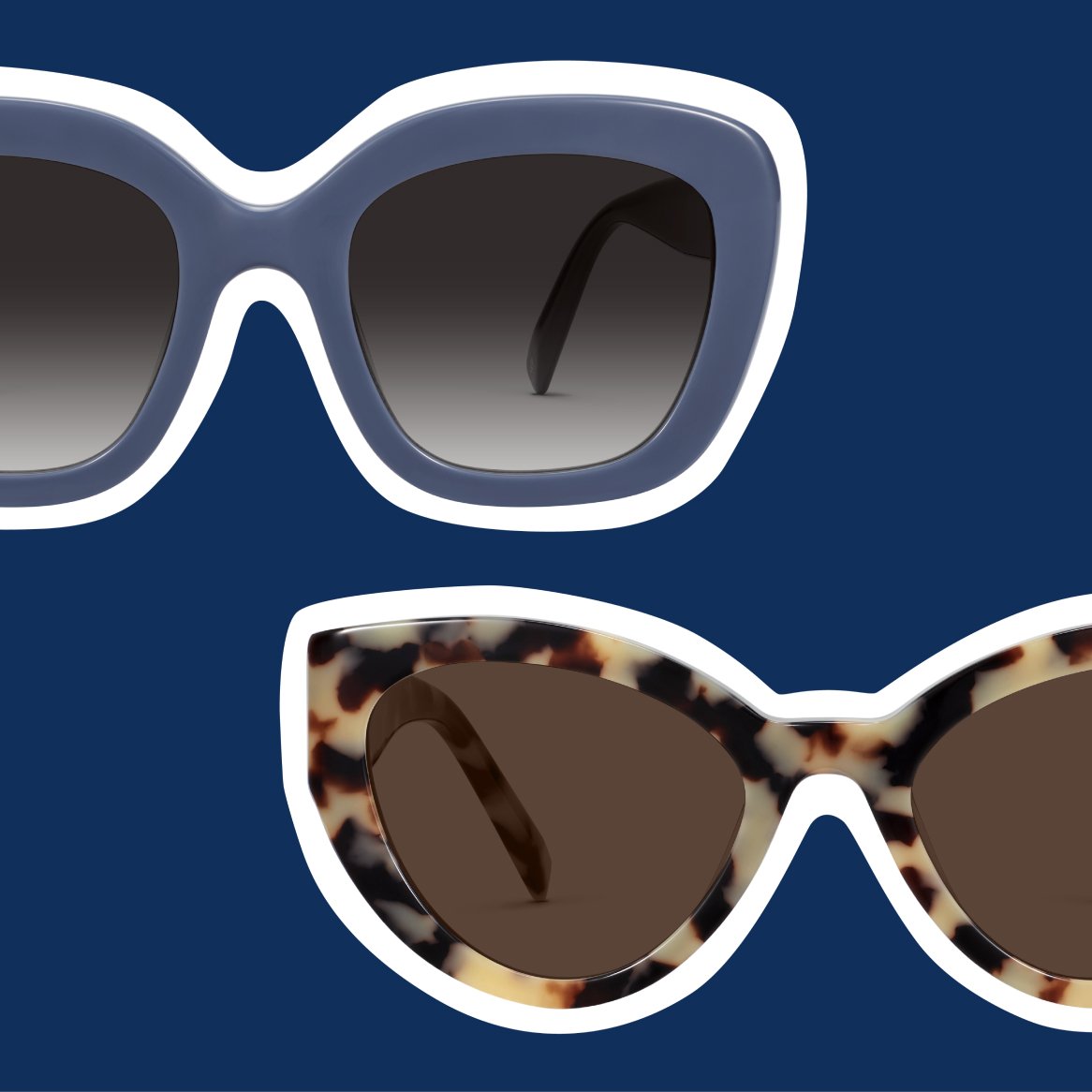
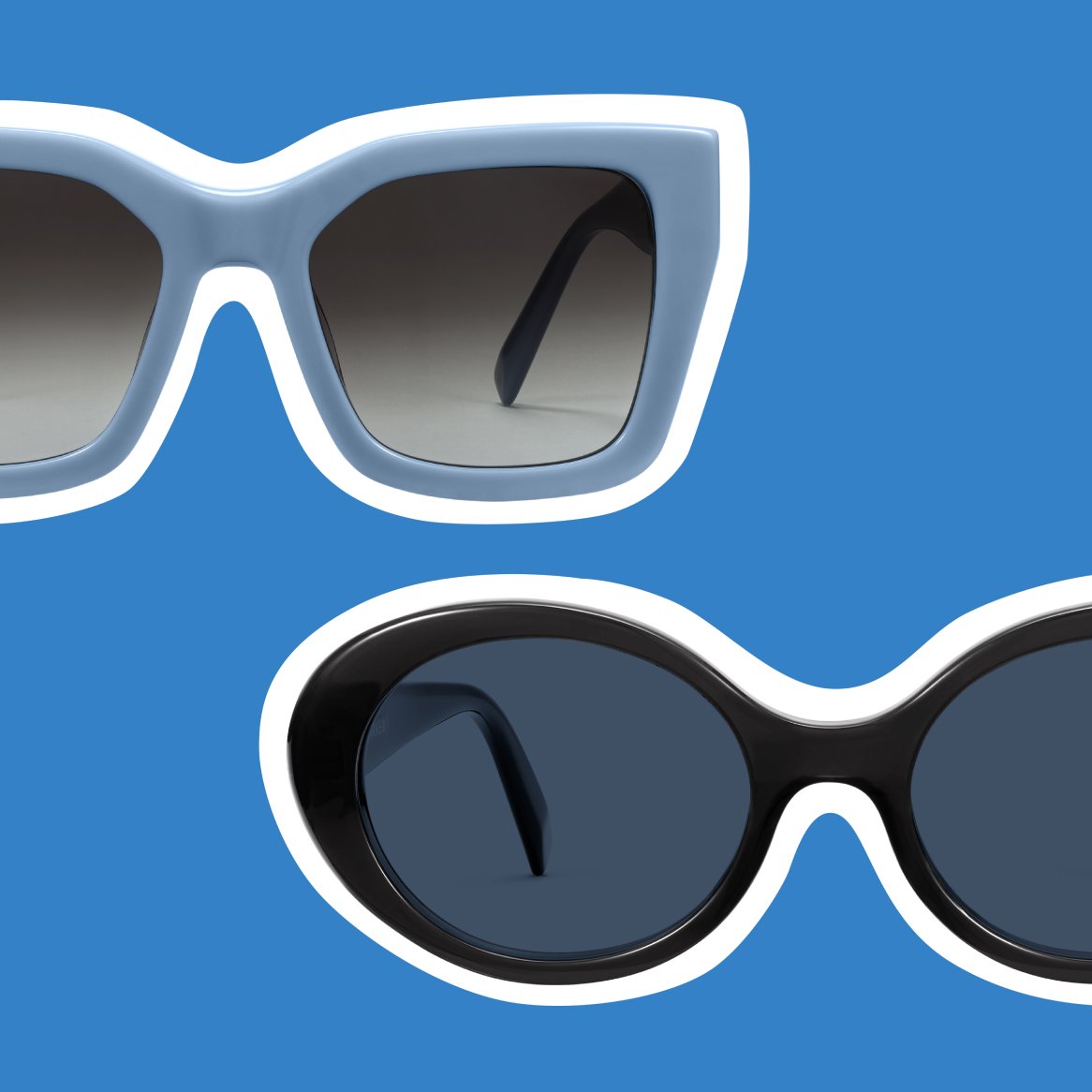
We have endless shapes and colors to choose from
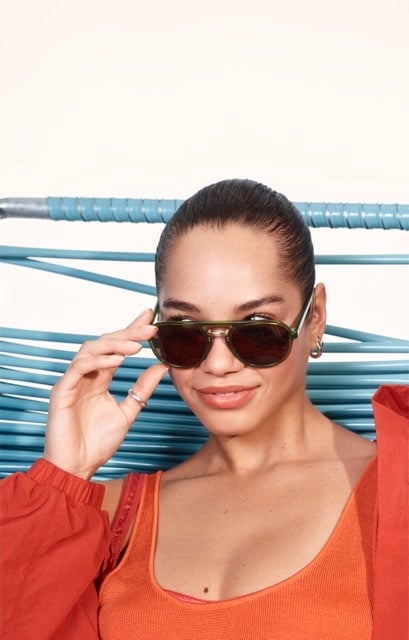
Visually, gradient lenses can also soften your overall look. The gentle fade often appears less stark than a solid black lens, which is one reason they’re common in fashion-forward aviators, oversized frames, and everyday lifestyle styles.
UV Filtering, Gradient Tints, and UV Information
One important thing to understand is that a gradient tint is about lens appearance, not UV filtering by itself. Brigham and Women’s Hospital notes that mirror coating and gradient tinting of lenses do not offer UV filtering on their own. In other words, the fade you see has nothing to do with how much ultraviolet radiation your lenses actually filter.
Information about UV-related performance depends on a UV-filtering treatment or material built into or applied to the lens. The American Optometric Association (AOA) advises that sunglasses used for sun exposure should filter 99 to 100% of both UV-A and UV-B rays, regardless of tint color or darkness. That same general recommendation can apply to any gradient sunglasses you consider for routine outdoor wear.
Want to protect your eyes from glare?
Try polarized sunglasses
When shopping, it can be helpful to ignore how dark the lenses look and review the label instead. Look for wording such as “100% UV filtering,” “UV400,” or confirmation that the lenses filter 99-100% of UVA and UVB. If that information is missing or unclear, you may want to reserve those glasses for occasional or short-term wear rather than prolonged time in bright sun.
- Daily outdoor use: Some individuals look for gradient lenses that clearly state 100% UV filtering or UV400 on the label.
- Driving: People often confirm UV-related details and consider lens colors that make it easier for them to distinguish colors and see their dashboard clearly.
- High-glare settings: Around water, snow, or sand, some people prefer pairing UV-filtering gradient lenses with polarization or choosing a darker, non-gradient lens, depending on their comfort and preferences.
Choosing the Right Gradient Sunglasses for All-Day Wear
Once you’ve reviewed UV information, you can also think about how your gradient sunglasses may look and function over longer wear.
Start with lens darkness and color. A subtle gradient – medium at the top, lighter but not clear at the bottom – is often used for commuting, walking, and casual outdoor time. Very pale gradients may feel better suited to lower-light conditions than very bright midday sun for some people.
Next, consider your typical day. If you’re driving and then working on a laptop at a bright café, a brown or gray gradient can change how bright or dim your surroundings appear while still allowing you to see text and colors. If you spend more time on sidewalks or park paths, a slightly darker upper tint may change how much brightness you notice from above.
Need sunglasses?
Starting at $95, with free shipping.
Fit and coverage matter as much as tint for many wearers. Frames that sit close to the face and wrap slightly around the sides may help reduce the amount of light entering from the edges. The AOA notes that many factors go into selecting eyewear, including ultraviolet radiation information, tint, lens shape, and coverage. For people who plan to wear gradient sunglasses frequently, paying attention to frame coverage and fit can be an important part of the selection process.
Final Thoughts on Gradient Sunglasses
Gradient sunglasses offer a combination of soft style and practical features for everyday use, especially if you often shift between bright sun, shade, and indoor spaces. The darker top can reduce brightness from overhead light while the lighter bottom maintains a clearer view of the area directly in front of you.
To get the most from them, start by reviewing UV details on the label, then consider lens darkness, color, and frame shape in light of how you typically spend your day. Try on a few styles, step into different lighting if possible, and pay attention to how things look to you as you look up, down, and side to side.
If you’re ready to explore options, you can begin by narrowing your search to gradient-tinted frames that display UV400 or 100% UV-related language on the label and that seem to match your face shape and daily routine. From there, you can compare colors, fits, and features until you find a pair that fits your personal style and everyday use.
Need (or want) new glasses or sunglasses?
Virtually try on frames from home—or visit a nearby store
Legal Disclaimer
MEDICAL DISCLAIMER: This content is provided for educational and informational purposes only and is not intended as medical advice, diagnosis, or treatment. This information should not be used to replace professional medical care or consultation. Individual results may vary significantly. Always consult with a qualified healthcare provider before making any decisions about your health, vision, or medical treatment. Never disregard professional medical advice or delay seeking treatment because of information you have read on this website.
VISION CARE DISCLAIMER: Vision correction needs vary by individual. Consult an eye care professional for personalized assessment and recommendations.
FDA DISCLAIMER: These statements have not been evaluated by the Food and Drug Administration. This content is not intended to diagnose, treat, cure, or prevent any disease or medical condition.
PROFESSIONAL CONSULTATION REQUIRED: Only qualified eye care professionals can provide personalized recommendations for your specific vision needs and health conditions.
This article is for informational purposes only. It is not intended to provide medical advice or substitute for professional health services. Warby Parker complies with all HIPAA regulations regarding your health information. For personal health questions or concerns related to your vision or eyewear prescriptions, please consult a qualified healthcare provider.
Need Glasses?
Shop prescription glasses starting at $95