Progressive Prescription Sunglasses for Driving & Daily Wear
There are endless visual challenges in everyday life. Suddenly bright sun, glare off an oncoming car windshield, and those tiny, tiny dashboard icons all demand different visual accommodations. For many adults over 40, juggling multiple pairs of glasses isn’t practical – especially when you’re on the road.
This article explains how progressive prescription sunglasses are designed to provide distance, mid-range, and close-up viewing in one tinted pair, which may be used for driving and other outdoor activities where you need to see information at different distances.
Progressive lenses offer a smooth, gradual change in power from distance to near without visible lines. Combined with UV filtering and tints, progressive prescription sunglasses can be made with sunglass tints and UV‑filtering materials for outdoor wear.
Interested in Progressives?
Make an appointment with an eye doctor to discuss if progressives are right for you
We will break down how progressives work, general considerations for using them while driving, key design choices like tints and polarization, and how to discuss these options with your eye care professional to choose an everyday pair that fits your needs.
How Progressive Prescription Sunglasses Work for Real-World Vision
Progressive lenses divide the lens surface into zones: distance at the top, intermediate through the middle, and near at the bottom. The power changes gradually between these zones, so you can shift your gaze instead of switching glasses. In sunglass form, that same design is simply combined with UV-filtering, tinted, or polarized materials.
For daytime driving, the upper zone is often used for viewing the road ahead. This is generally the distance viewing section. A well-fitted progressive lens may help provide a distance zone that many wearers find convenient for viewing the road.
Progressives made easy
See clearly at every distance with progressive lenses
The intermediate zone is often used for viewing objects at arm’s length, such as dashboards, in-car displays, or side mirrors. Clinical guidance on the clinical management of presbyopia notes that progressive designs may be selected with different design priorities, such as more emphasis on intermediate viewing distances.
Finally, the near zone is typically used for tasks that involve looking at closer objects, such as reading a map, checking a phone at a stop (when safe and legal), or signing a receipt at a fuel stop. Outdoors, that same near area can be used to view menus on a sunny patio or inspect fine details during hobbies.
Benefits and Trade-Offs: Distance, Dashboard, and Details
Some people choose progressive prescription sunglasses so they can use a single pair of prescription sunglasses when they need to look at objects at multiple distances outside. The same pair may be used for distance viewing, checking a dashboard, or looking at closer objects, depending on where the wearer looks through the lens. Many wearers like the convenience of having one pair they can use for multiple viewing distances outdoors.
Progressive lenses are one of several optical options used for people who want a lens design that includes distance, intermediate, and near viewing in one pair of glasses. When these lenses are made as sunglasses, they are simply combined with lens tints and UV‑filtering materials so they can be worn outdoors.
- Distance: The upper area is typically used for viewing objects that are farther away, such as the road ahead, scenery, or distant signs.
- Dashboard: The middle area is often used for viewing objects at intermediate distances, such as gauges, navigation screens, or center-console displays.
- Details: The lower area is often used for viewing closer objects, such as a watch face, a menu, or other near-range details when you are outside.
There are trade-offs to consider. Individual experiences can vary, which is why discussing your preferences and past experiences with your eye care professional is important.
Want to try them on?
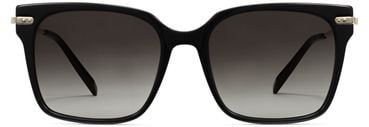
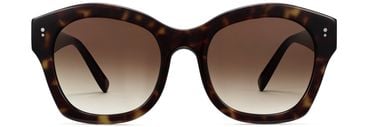
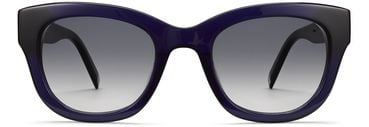
Check out our beselling progressive frames
Choosing the Right Progressive Prescription Sunglasses
Start by thinking about when and where you wear sunglasses most often. For example, you might spend more time on highways, in city traffic, or outdoors for work or leisure. Sharing this information with your eye care professional can help them explain which lens design characteristics may align with the activities you describe.
Next, consider lens options. Polarized lenses are commonly chosen by people who want lenses designed to manage reflected light from surfaces like roads, car hoods, or water. For daytime driving, many people prefer neutral gray or gray-green tints because they tend to provide a more neutral color appearance.
Photochromic (light-adaptive) lenses are designed to change their tint in response to certain light conditions, which some people find useful if they move between indoors and outdoors frequently. These lenses may not reach their darkest state behind some vehicle windshields unless upgraded to XTRActive.
Frame choice is also an important design consideration. Frames with very small vertical lens openings may provide less space for the gradual transition between distance, intermediate, and near viewing areas. Frames with a somewhat deeper lens shape can give your eye care professional more flexibility when positioning the different viewing areas within the lens.
Summing Up Progressive Prescription Sunglasses
Progressive prescription sunglasses are designed for use at multiple viewing distances in bright conditions. Many people choose them so they can use a single pair of prescription sunglasses across a variety of outdoor situations.
If you are over 40, have noticed changes in close-up viewing, or already wear progressives in your everyday glasses, you can ask your eye care professional whether a pair of sunglasses with progressive lenses is an option for your driving and outdoor activities. You may want to ask about lens design, tints, polarization, and how frame shape can influence where the different viewing areas fall within the lenses.
To prepare for that conversation, you can bring your current glasses, describe your typical day (including time spent driving or outdoors), and discuss any past experiences you have had with progressive lenses. Your eye care professional can then explain what lens and frame combinations are available and how they are generally used.
Legal Disclaimer
MEDICAL DISCLAIMER: This content is provided for educational and informational purposes only and is not intended as medical advice, diagnosis, or treatment. This information should not be used to replace professional medical care or consultation. Individual results may vary significantly. Always consult with a qualified healthcare provider before making any decisions about your health, vision, or medical treatment. Never disregard professional medical advice or delay seeking treatment because of information you have read on this website.
VISION CARE DISCLAIMER: Vision correction needs vary by individual. Consult an eye care professional for personalized assessment and recommendations.
FDA DISCLAIMER: These statements have not been evaluated by the Food and Drug Administration. This content is not intended to diagnose, treat, cure, or prevent any disease or medical condition.
PROFESSIONAL CONSULTATION REQUIRED: Only qualified eye care professionals can provide personalized recommendations for your specific vision needs and health conditions.
This article is for informational purposes only. It is not intended to provide medical advice or substitute for professional health services. Warby Parker complies with all HIPAA regulations regarding your health information. For personal health questions or concerns related to your vision or eyewear prescriptions, please consult a qualified healthcare provider.
Are progressive prescription sunglasses used for driving?
Progressive prescription sunglasses are one option some drivers use when they want a single pair of prescription sunglasses for viewing at distance, intermediate, and near ranges. Whether they are appropriate for you while driving is a question to discuss with your eye care professional, who can consider your prescription, visual needs, and local regulations.
Will progressive sunglasses affect my ability to see the dashboard?
Progressive lenses are typically designed with a distance area, an intermediate area, and a near area. Many wearers use the intermediate portion of the lens to view gauges and digital displays. Your ability to see your dashboard depends on factors like your prescription, the specific lens design, the fit of your frames, and your seating position. Your eye care professional can evaluate these factors for you.
Do I still need separate distance-only sunglasses?
Some people prefer to have single‑vision distance sunglasses for activities where they want a very wide distance viewing area, and use progressive prescription sunglasses for situations where they expect to look at objects at multiple distances. The choice between single‑vision and progressive sunglasses is personal and should be made in consultation with your eye care professional.
How long does it take to adjust to progressive prescription sunglasses?
Many people report an adjustment period when they first start wearing progressive lenses, whether in clear glasses or sunglasses. The timeline can vary by individual and can be influenced by factors like the lens design, frame fit, and how often you wear the lenses. If you have concerns about adapting, your eye care professional can discuss what to expect and how to follow up if you experience difficulties.
Can progressive sunglasses be polarized?
Yes. Polarized progressive lenses are available and are commonly chosen by people who prefer lenses that are designed to manage reflected light from surfaces like roads or water. Your eye care professional can explain how polarized lenses work and whether they are a good match for how and where you typically wear sunglasses.
Need Glasses?
Shop prescription glasses starting at $95