Do You Need an Eye Exam to Buy Glasses?
You just found out you may need glasses, or you’ve uncovered an old prescription that feels less like a useful document and more like an archaeological discovery. Either way, take a breath. The process is usually much simpler than it appears from the outside. The confusion comes from the fact that buying glasses sits at the intersection of healthcare, personal style, and paperwork, three categories that rarely make anyone feel immediately confident.
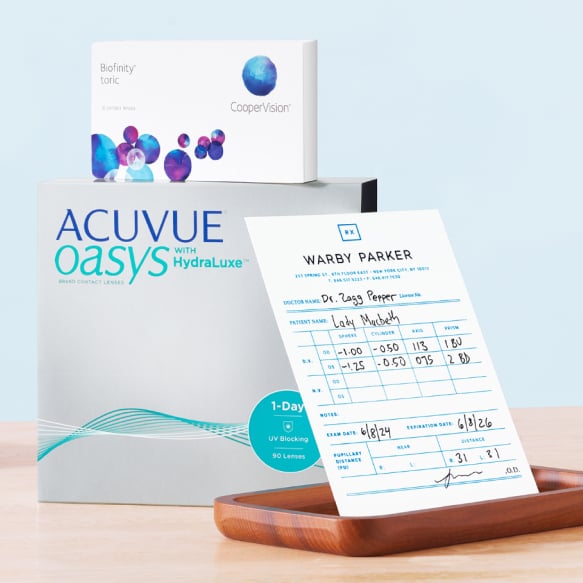
One of the most common questions people have is whether they need an eye exam before they can buy glasses. The answer depends on what you already have. If you have a current, valid prescription, you can generally move straight to shopping for frames and lenses. If you don’t have a prescription, aren’t sure whether yours is still current, or suspect your vision has changed, an eye exam is typically the most straightforward next step. The exam provides the information that makes every other decision easier.
Part of the uncertainty comes from the unfamiliar language. Prescriptions contain numbers, abbreviations, and measurements that can look intimidating at first glance. Online ordering adds another layer, asking for details you may not have thought about before. It’s easy to feel as though everyone else received a handbook on buying glasses and you’re trying to catch up halfway through the process.
No matter your eye color'
You deserve to see clearly. (And to have a little fun shopping for eyewear, too.)
The good news is that you don’t need to become an optical expert. You just need to know where you are in the sequence. Do you have a current prescription? Is it still accurate? What information will you need when ordering? And when does it make sense to schedule an exam instead of trying to work around an outdated prescription? This guide walks through each step, explains the common mistakes people make, and helps you move from uncertainty to a pair of glasses that actually works for your eyes and your everyday life.
The Short Answer: A New Exam Isn’t Always Required
You don’t always need a new eye exam to buy glasses. You do need a current, valid glasses prescription if you’re ordering prescription eyeglasses.
Think of the exam as the part that provides the prescription. Choosing frames is the part where that prescription becomes something you’ll actually wear on your face, hopefully without sighing every time you pass a mirror.
If your prescription is current and complete, you can usually move straight to frames, lens choices, and prescription entry. If it’s expired, missing, or your vision feels different, book an eye exam before ordering.
Nearsighted?
Our glasses include prescription lenses with scratch-resistant, anti-reflective coatings
Mistake-Proof Your Next Step: Exam, Prescription, or Frames?
A few common mix-ups cause most of the confusion:
- New exam assumption: You may not need one if your glasses prescription is still valid.
- Expired Rx confidence: An old or incomplete prescription can slow down online ordering.
- Contact lens confusion: Contact lens prescriptions and glasses prescriptions aren’t always interchangeable.
- Pupillary distance mystery: Pupillary distance helps align lenses with your eyes.
- Lens afterthought: Single-vision, progressives, and readers support different needs, so lens type matters.
Quick decision path: No glasses prescription? Book an eye exam. Have one, but it’s expired or unclear? Book an exam or check with the provider who issued it. Current and complete? Shop frames, then enter or upload prescription details during checkout.
Warby Parker can help along the way, with eye exams at many stores, online and in-store frame shopping, Virtual Try-On, and lens selection support.
What a Current Prescription Lets You Do Next
With a current glasses prescription, you can start choosing frames online or in person. During checkout, you’ll typically enter, upload, or otherwise provide your prescription details, depending on the shopping flow.
You’ll also pick lenses. Single-vision lenses correct a single distance, such as near or far. Progressive lenses include multiple zones for near, intermediate, and distance vision. Readers are made for close-up tasks like reading. Lens options can affect price, and some treatments, like anti-reflective coating, can help reduce glare.
Fit counts, too. Frame width, bridge fit, and shape affect comfort, not just style. Most Warby Parker frames start at $95, including prescription lenses, while progressives and other upgrades may cost more. If your prescription is ready, browse prescription eyeglasses or try Virtual Try-On before committing to a shape.
Need Glasses?
Shop prescription glasses starting at $95
When Booking an Eye Exam Is the Smart Move
Book an eye exam if you don’t have a glasses prescription yet. Same goes if your prescription is expired, you can’t confirm whether it’s valid, your current glasses no longer feel clear or comfortable, or you only have a contact lens prescription.
It’s also smart to book if the information is incomplete or hard to interpret. No shame there. Prescriptions contain tiny abbreviations that look like they were invented by a very efficient robot.
Warby Parker offers eye exams at many stores, with availability varying by location. An exam helps provide an updated prescription so you can order glasses with fewer question marks.
Peep this
We offer prescription glasses starting at $95, with free shipping and free returns
Your Next Step After Asking, “Do You Need an Eye Exam to Buy Glasses?”
Back to that old prescription tucked in a drawer, the late-night search session, or the realization that your current glasses are no longer doing their job: the key point is refreshingly simple. Buying glasses doesn’t always require a brand-new eye exam, but it does require a current, valid prescription if you’re ordering prescription lenses. That’s the first question to answer, because it determines everything that follows.
If your prescription is up to date, you’re already past the most technical part of the process. From there, it’s about selecting frames, choosing lens options that fit your routine, and making sure the final result matches both your vision needs and your personal preferences. If your prescription is expired, missing, or you suspect your vision has changed, scheduling an eye exam is usually the quickest way to get back on solid ground.
For many people, the prescription turns out to be the easy part. The harder question is often, “Which glasses actually suit me?” That’s where trying on different styles, comparing frame sizes, and getting feedback can be helpful. The goal is to find the pair you’ll be happy to wear every day.
Once the prescription piece is handled, the experience becomes much more enjoyable. You’re no longer solving a medical puzzle. You’re choosing something that helps you see better and feels right when you put it on. Great-fitting glasses tend to live at the intersection of function and personality: clear vision, comfortable fit, and a look that feels natural enough that you stop thinking about them and get on with your life.
Need a new pair of glasses?
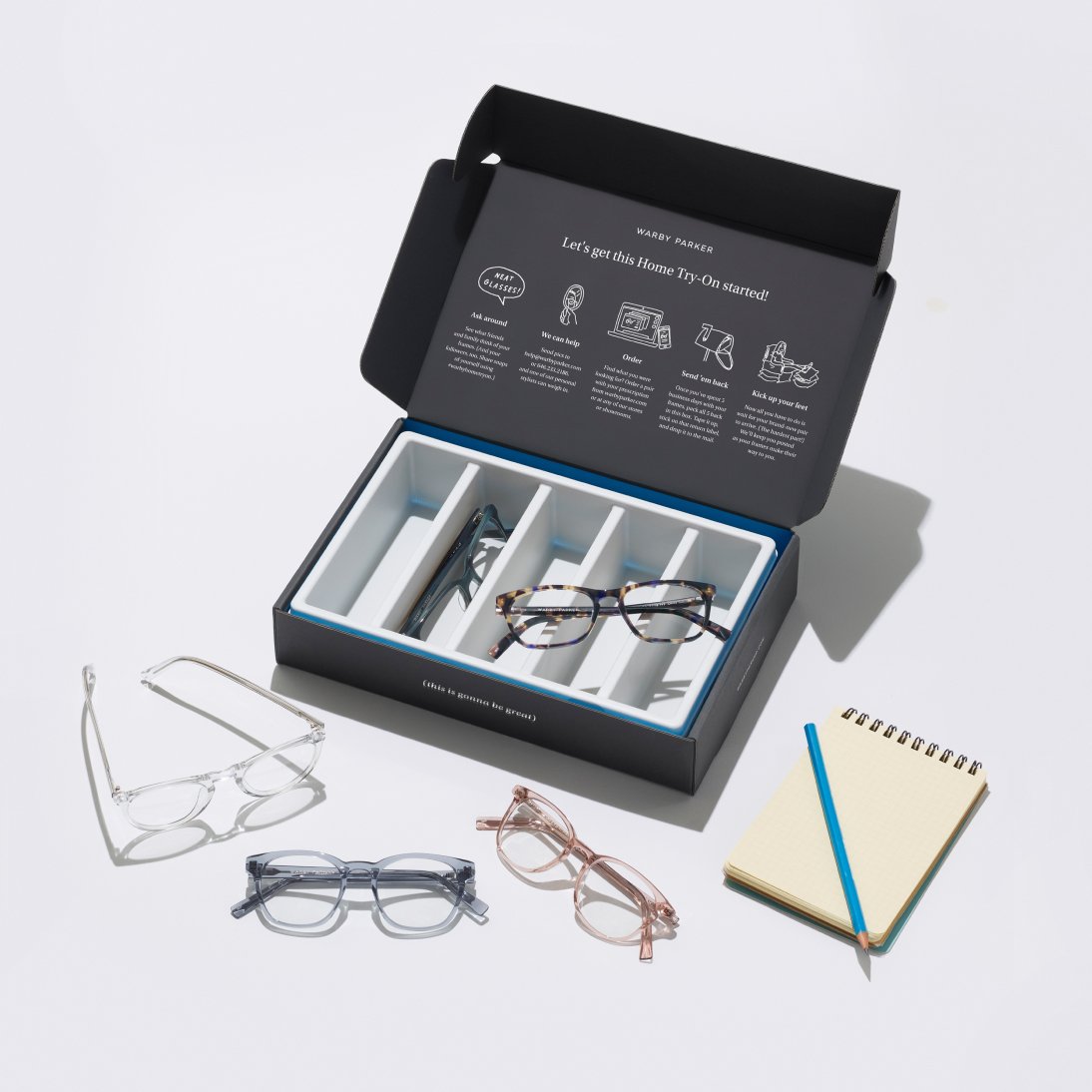
Vitually try on frames in the comfort of your own home
Legal Disclaimer
MEDICAL DISCLAIMER: This content is provided for educational and informational purposes only and is not intended as medical advice, diagnosis, or treatment. This information should not be used to replace professional medical care or consultation. Individual results may vary significantly. Always consult with a qualified healthcare provider before making any decisions about your health, vision, or medical treatment. Never disregard professional medical advice or delay seeking treatment because of information you have read on this website.
VISION CARE DISCLAIMER: Vision correction needs vary by individual. Consult an eye care professional for personalized assessment and recommendations.
FDA DISCLAIMER: These statements have not been evaluated by the Food and Drug Administration. This content is not intended to diagnose, treat, cure, or prevent any disease or medical condition.
PROFESSIONAL CONSULTATION REQUIRED: Only qualified eye care professionals can provide personalized recommendations for your specific vision needs and health conditions.
This article is for informational purposes only. It is not intended to provide medical advice or substitute for professional health services. Warby Parker complies with all HIPAA regulations regarding your health information. For personal health questions or concerns related to your vision or eyewear prescriptions, please consult a qualified healthcare provider.
Do you need an eye exam to buy prescription glasses?
Not always. If you already have a current, valid glasses prescription, you can usually buy prescription glasses without a new exam.
Can you buy glasses without an eye exam?
You can buy non-prescription frames without an eye exam. Prescription eyeglasses require a valid glasses prescription.
Can I use an old prescription to buy new glasses?
Only if it’s still current and valid. If it’s expired, incomplete, or no longer feels right, book an eye exam.
What information do I need to order prescription glasses online?
Usually you’ll need your prescription details, a valid (unexpired) prescription, your pupillary distance, your frame choice, and your lens type.
Is a contact lens prescription the same as a glasses prescription?
Not necessarily. Use a glasses prescription when ordering prescription eyeglasses, since measurements can differ.