Glasses for Wide Nose Bridge: Fit and Style Guide
If every pair of glasses you try pinches at the top of your nose or slowly slides south by mid-afternoon, the issue might not be the frames. It might be the fit. A lot of standard designs just aren’t built with wider nose bridges in mind, which can turn what should be a simple choice into an ongoing experiment.
This guide is here to take some of the guesswork out of that process. Instead of trying on pair after pair and hoping something clicks, we’ll look at how to find a fit that actually works, one that stays put and feels comfortable throughout your day.
We’ll break down what “glasses for a wide nose bridge” really means in practical terms, how to interpret frame measurements without overthinking them, and how different bridge designs can change both the way your glasses feel and how they sit on your face.
With or without makeup…
You can always express your style with your favorite frames
By the end, you’ll know what to look for whether you’re shopping in-store or online, from common bridge-width ranges to frame styles that tend to work well, along with a few quick fit checks and when it’s worth getting a professional adjustment to dial things in.
Understanding Wide Nose Bridges and Fit Considerations
There is no single “normal” nose shape. Research shows that anthropometric nasal measurements differ across populations, including bridge width and height. That variation helps explain why some people rarely notice fit issues, while others frequently encounter slipping or pressure marks with many frames.
For those with a wide nose bridge, a very common concern is pinching. When the bridge of the frame is too narrow, the frame may “clamp” onto the nose to stay in place, which can lead to red marks and discomfort. Even if the rest of the frame seems to be the right size, an undersized bridge can feel tight and unstable.
At the same time, simply sizing up the entire frame rarely solves the issue. Design research notes that the nose bridge is one of the more challenging fit areas in eyewear, because many frames are created around a single width number and do not fully account for 3D features such as height and curvature. For wider bridges, that means it helps to look for a frame that takes both width and shape into account.
Hot Tip
Astigmatism: just another reason to look stylish
Key Measurements: How to Read Frames for a Wide Nose Bridge
Every frame has three main numbers, usually printed on the inside of the temple: lens width, bridge width, and temple length (for example, 52-20-145). For anyone shopping for glasses for a wide nose bridge, the middle number is especially important.
Professional fitting resources describe these as key measurements for frame fitting, with bridge size defined as the shortest distance between the lenses. If that number is too small for your anatomy, the frame may press into the sides of your nose, even if everything else appears to fit.
- Bridge width: As a general benchmark, people with a wide nose bridge often prefer bridge widths toward the higher end of the common range (for many adults, that is often in the high teens to low twenties in millimetres). Use this as a starting point, not a strict rule.
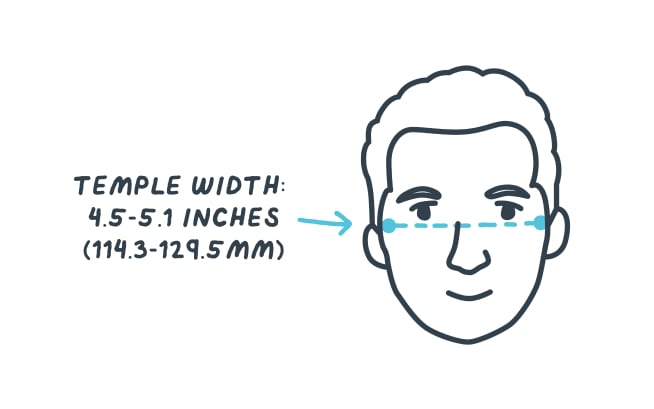
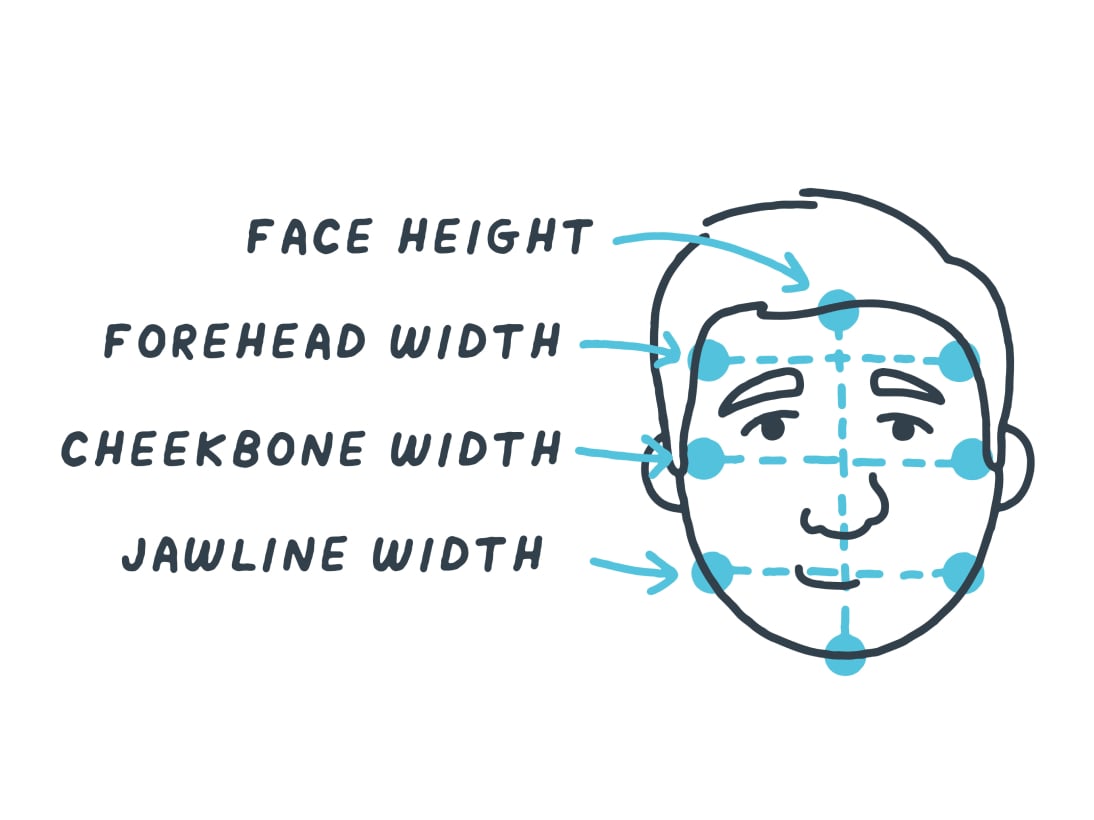
- Overall frame width: A wider bridge on an overly narrow frame can still feel tight. Check that the frame edges are roughly aligned with the width of your face, not extending far beyond or squeezing inward.
- Temple length: Temple length plays a role in how the frame rests on your face. If the temples are too short or too long, they can pull the frame forward or backward and increase pressure at the bridge.
- Nose pad placement: On metal frames, nose pads can often be adjusted wider apart to accommodate a broader bridge; on plastic frames, the bridge is fixed, so selecting a starting width that feels comfortable is important.
Frame Styles and Practical Fit Checks
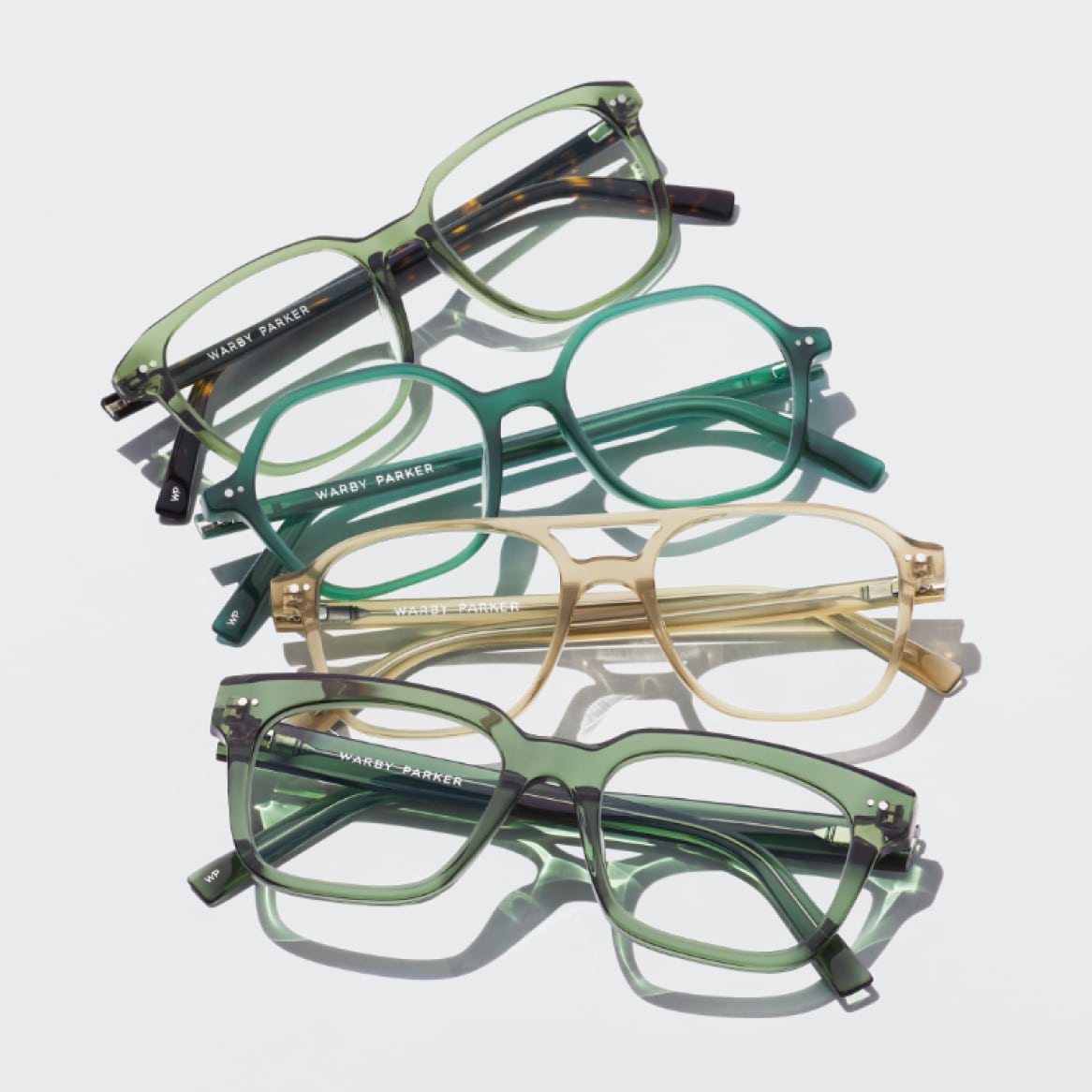
Certain frame shapes are often chosen as glasses for a wide nose bridge. Look for bridges that either follow the natural contour of your nose or spread contact across a broader area rather than a narrow point.
Keyhole bridges are a popular option. They resemble an old-fashioned keyhole, with more room at the top of the bridge and contact lower on the sides. This design may reduce pressure at the very top of a wide bridge and can create a more tailored look.
Frames with larger, adjustable nose pads are another option to consider. On metal or mixed-material frames, an optician can usually widen the pads, change their angle, or in some cases swap them for different pads to change how the frame sits. If you are sensitive to how frames feel on your nose, lightweight materials like titanium or thin acetate may feel more comfortable.
Need Glasses?
Shop prescription glasses starting at $95
Once you have a candidate pair on, you can run through a quick fit check:
- Stability: The frame rests securely without sliding when you gently move your head.
- Comfort: You do not notice pronounced red marks or discomfort on the sides of your nose after about 15-20 minutes of wear.
- Lens alignment: The lenses appear centered in front of your eyes, not unusually high or low, and your eyelashes are not brushing the lenses.
- Bridge feel: The bridge feels stable, but you can still pinch the pads or bridge area lightly without pain.
A Good Fit for Wide Noses
Choosing glasses for a wide nose bridge involves more than simply picking a larger frame. Focusing on bridge width, overall frame balance, and nose-bridge design can help your glasses stay in place and feel more comfortable. When those elements work together, your frames are more likely to feel like a natural part of your everyday routine.
As a next step, you might narrow your search to frames within a bridge-width range that feels comfortable, then compare a few different bridge shapes, such as keyhole and adjustable-pad designs, and, if possible, ask an optician to fine-tune the fit.
If you have specific fit questions, consider booking an in-person adjustment or reaching out to customer support when shopping online. You can also share this guide with anyone else who struggles with nose-bridge fit so they can approach their search with more information.
Did you know?
You can order our frames as readers or with non-prescription lenses at no additional cost
Legal Disclaimer
MEDICAL DISCLAIMER: This content is provided for educational and informational purposes only and is not intended as medical advice, diagnosis, or treatment. This information should not be used to replace professional medical care or consultation. Individual results may vary significantly. Always consult with a qualified healthcare provider before making any decisions about your health, vision, or medical treatment. Never disregard professional medical advice or delay seeking treatment because of information you have read on this website.
VISION CARE DISCLAIMER: Vision correction needs vary by individual. Consult an eye care professional for personalized assessment and recommendations.
FDA DISCLAIMER: These statements have not been evaluated by the Food and Drug Administration. This content is not intended to diagnose, treat, cure, or prevent any disease or medical condition.
PROFESSIONAL CONSULTATION REQUIRED: Only qualified eye care professionals can provide personalized recommendations for your specific vision needs and health conditions.
This article is for informational purposes only. It is not intended to provide medical advice or substitute for professional health services. Warby Parker complies with all HIPAA regulations regarding your health information. For personal health questions or concerns related to your vision or eyewear prescriptions, please consult a qualified healthcare provider.